
































Record Allocation for Civil Aviation Oversight
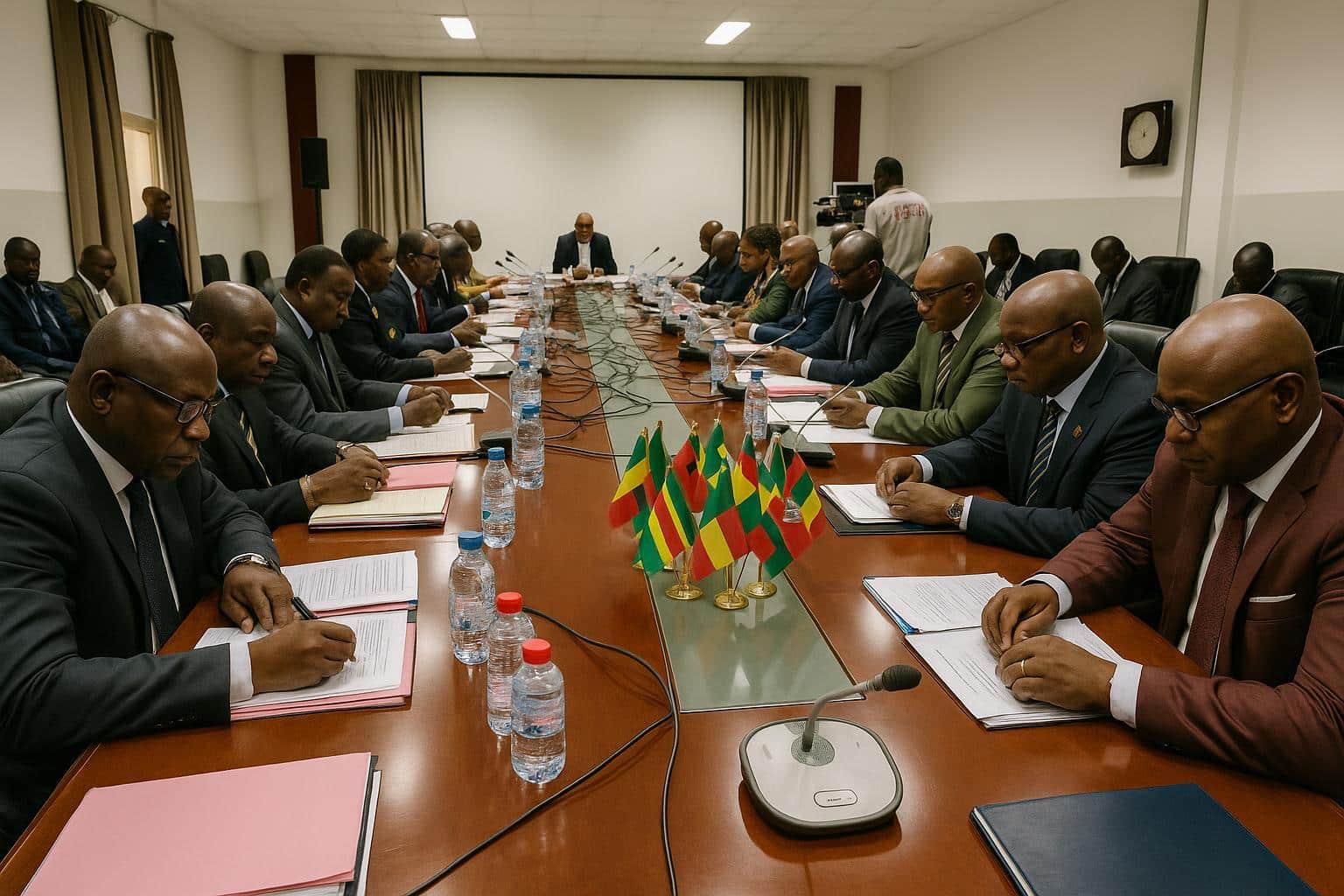
The National Civil Aviation Agency (ANAC) secured a record budget of CFA 9.244 billion for 2026 during its direction committee meeting in Brazzaville on 12 December, chaired by Ferdinand Sosthène Likouka, chief of staff at the Ministry of Transport.
Approved revenues stand at CFA 9 244 260 500 and expenditures at CFA 9 237 336 000, leaving a modest surplus that management intends to channel into contingency reserves, according to the draft activity report validated the same day (Ministry of Transport communique, 12 Dec 2025).
Strategic Budget Milestones
The 2026 envelope is roughly 11 % higher than the 2025 figure, reflecting rising traffic at Maya-Maya and Pointe-Noire airports and the stepped-up need for surveillance equipment, meteorological tools and staff training.
Management highlighted three spending clusters: 43 % for safety and security programmes, 29 % for human-resource costs and 18 % for infrastructure support, with the balance earmarked for digitalisation, according to internal budget tables shared during the session.
Governance Reform Under Decree 2025-369
Decree 2025-369, published on 3 November 2025, shifts ANAC from a direction committee to a full board of directors and introduces a director-general model, harmonising the agency with Congo’s new framework for state-owned enterprises.
Likouka stressed the need for “a harmonious, rigorous and exemplary transition” toward the structure, adding that governance upgrades will bolster transparency for lenders and development partners involved in aviation projects.
Operational Priorities: Safety and Service
Congolese authorities want to sustain the country’s Category 1 ICAO ranking by intensifying runway inspections, enhancing incident reporting and procuring advanced radar systems suited to equatorial weather patterns.
Additional funds will modernise aeronautical meteorology stations, an area singled out as under-resourced in the 2024 audit. Better data should reduce weather-related delays that currently average 14 % of movements in the wet season (ICAO regional statistics 2023).
Human Capital and Personnel Plans
Delegates reiterated a call to regularise staff who have accumulated three fixed-term contracts, a step seen as critical for talent retention amid competition from private handling firms and regional regulators.
Recruitment plans target flight-operations inspectors, air-traffic controllers and meteorological technicians to fill a shortfall of about 60 positions, partly funded by reallocating savings from completed projects under the 2024-2025 cycle.
Financial Outlook and Funding Mix
User fees levied on airlines remain ANAC’s largest revenue line, contributing roughly CFA 5.7 billion. The balance derives from certification services, passenger-safety charges and a modest treasury transfer designed to cushion foreign-exchange volatility.
Officials hinted at exploring concessional financing from the Development Bank of Central Africa for large-ticket items such as a secondary surveillance radar, limiting pressure on operating cash flows while aligning with regional infrastructure strategies.
Market Signals for Airlines and Investors
For carriers, a stronger regulator may speed up route approvals and reduce insurance costs, two metrics closely watched by investors in Equatorial airlines, including national flag-carrier ECAir’s prospective relaunch.
Airport concessionaires view the budget as confirmation that state oversight capacity is improving, a prerequisite for PPP negotiations on cargo terminals at Pointe-Noire and secondary hubs like Ollombo, industry consultants noted.
Regional Integration and Sustainability Lens
The budget dovetails with CEMAC’s drive toward a common air-transport market, and officials confirmed that ANAC will dedicate CFA 318 million to align domestic regulations with the Yamoussoukro Decision and the Single African Air Transport Market.
Environmental stewardship also gains ground, with CFA 210 million allocated to emissions-monitoring equipment that will help carriers comply with CORSIA from 2027, reinforcing Congo-Brazzaville’s broader climate-policy commitments for the Congo Basin.