












Diversification declared a national duty
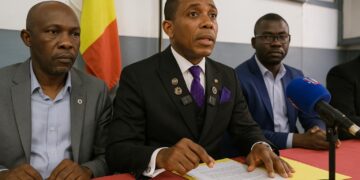
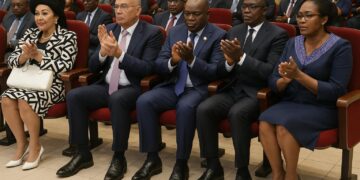
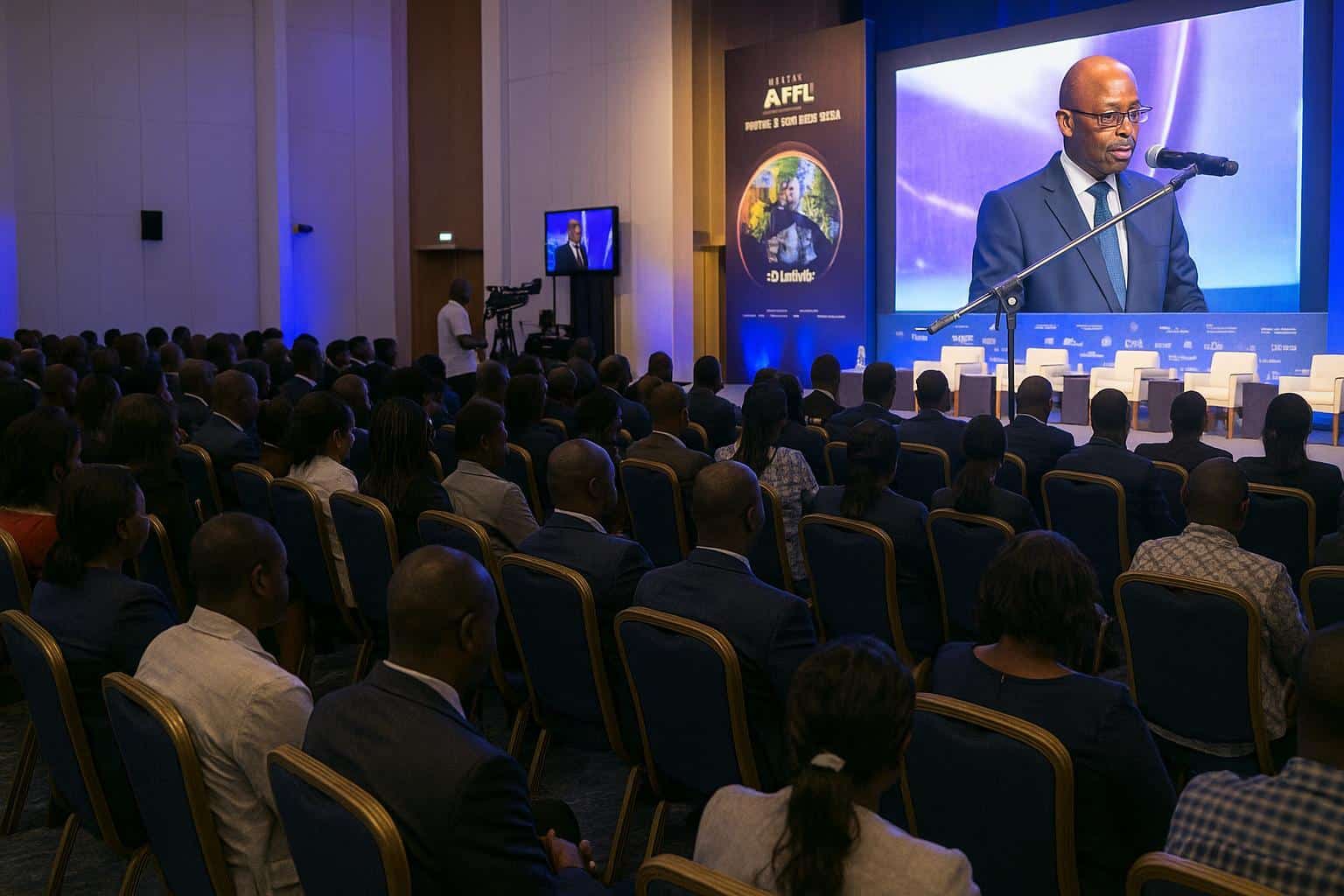
Standing before investors at the Vox Eco Forum in Brazzaville on 13 November, Minister of International Cooperation and PPP Promotion Denis Christel Sassou Nguesso framed economic diversification as “not only an economic necessity but a national requirement”, underscoring the urgency of widening the growth base beyond hydrocarbons. (Vox Eco Forum, 13 November).
He argued that the State should prioritise social services such as education, health and basic utilities, while private capital drives productive infrastructure and job-creating sectors, a functional division intended to balance fiscal constraints with the agility of markets and unlock inclusive, durable growth.
PPP reform 88-2022 lures investors
The cornerstone of this vision is Law 88-2022 on public-private partnerships, enacted 30 December 2022 and operationalised by 2024 decrees. The statute codifies transparent procedures, risk-sharing formulas and dispute-resolution mechanisms, giving foreign and domestic investors clearer sight on timelines, tariffs and sovereign guarantees.
Officials stress that regulation alone is insufficient; consistent project preparation, monitoring and evaluation must restore confidence eroded by past delays. Sassou Nguesso called for “rigorous governance” to secure legal certainty and equitable risk allocation, signalling a willingness to learn from regional benchmark experiences in Morocco and Côte d’Ivoire.
Flagship projects signal momentum
Tangible PPP pipelines already dot the map. Works to modernise container and bulk terminals at the deep-sea port of Pointe-Noire are advancing, aimed at tripling capacity and positioning Congo as a multimodal hub for Central Africa’s mineral and agri-bulk corridors, according to port authority figures.
Further south-north connectivity is planned through a 400-kilometre products pipeline linking Pointe-Noire to Maloukou-Tréchot via Loutété, expected to reduce fuel-haulage costs by 30 percent and lower road congestion. Parallel digitalisation of customs processes promises faster clearance times, while four special economic zones roll out investor-ready land and fiscal incentives.
Financing the pivot away from oil
Financing these ambitions sits at the heart of the diversification debate. The minister advocates mobilising domestic savings through pension funds, insurance pools and deeper bank intermediation, thereby trimming reliance on concessional borrowing and volatile commodity revenues that have historically driven BoC fiscal cycles.
He also touts closer engagement with sovereign wealth funds from the Gulf and Asia, seeking co-investment structures that blend long-term patient capital with Congo’s resource endowments. To enhance credibility, authorities promise full digital traceability of expenditure lines and quarterly publication of PPP dashboards.
Banks remain cautious, citing residual project-bankability gaps. In response, the government is designing viability-gap grants and local-currency guarantee schemes with regional development partners. An inaugural CFA-denominated infrastructure bond is reportedly under study for 2025, reflecting efforts to deepen CEMAC capital markets and limit exchange-rate risk.
Non-oil sectors underpin growth rebound
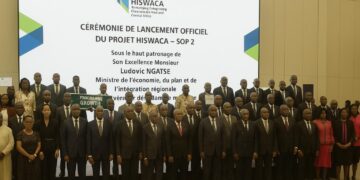
Minister of Economy, Planning and Regional Integration Ludovic Ngatsé contextualised the macro outlook, noting that after a difficult decade the Republic of Congo returned to growth of about two percent in 2024, projected to reach three percent in 2025 as policy reforms take hold.
Strikingly, non-oil activities now contribute the bulk of incremental GDP. Agriculture, financial services, hospitality and ICT registered the fastest expansion, reflecting gradual maturation of earlier initiatives such as agripoles, mobile-money regulation and tourism visa facilitation. The shift marks progress toward insulating public finances from oil‐price gyrations.
Nonetheless, Ngatsé cautioned that petroleum will remain meaningful and could rebound in 2025 as new wells come onstream, reinforcing the case for simultaneous upgrades in governance and diversification so that future oil windfalls support, rather than substitute, structural transformation.
Building trust through governance
Trust, several speakers emphasised, is the true multiplier. Civil-society monitors welcome the forthcoming national PPP unit but insist that data on contingent liabilities and revenue flows be publicly available in machine-readable form. International rating agencies also watch governance metrics closely when calibrating country risk premia.
Sassou Nguesso responded that a web portal integrating procurement notices, social-impact indicators and independent audit results is under design, aiming to position Congo among the region’s most transparent jurisdictions. He added that streamlined one-stop investor services have already cut average business-registration delays to eight days.
Media, NGOs and diaspora as catalysts
Forum organiser and Vox Congo CEO Vérone Mankou urged stronger collaboration between ministries, financiers and NGOs to surface innovative solutions. He argued that media platforms can demystify diversification by translating technical reforms into practical opportunities for farmers, start-ups and diaspora entrepreneurs willing to reinvest skills and capital.
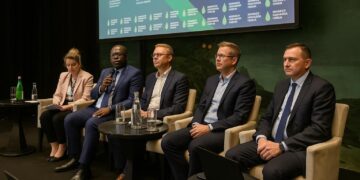
As the third edition of Vox Eco concluded under the banner “Financing Congo’s Economic Diversification”, consensus formed around a simple premise: implementation speed will determine success. With legal scaffolding in place and projects queued, the next twelve months will test the country’s capacity to turn policy into ports, pipelines and pay-cheques.
Regional market integration amplifies returns
Entry into force of the African Continental Free Trade Area, together with CEMAC efforts to ease border formalities, could expand Congo’s addressable market from five to 1.3 billion consumers. Economists note that diversified exporters of timber products, processed foods and fintech services would be early beneficiaries.