





Luanda Summit Marks 25 Years of AU-EU Partnership
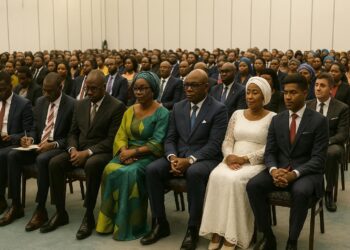
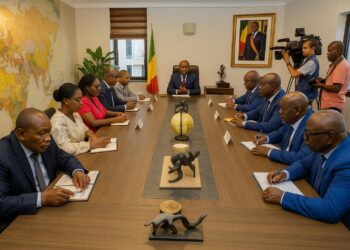
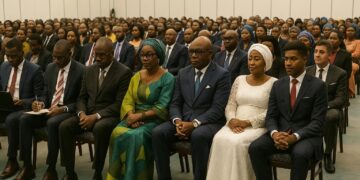
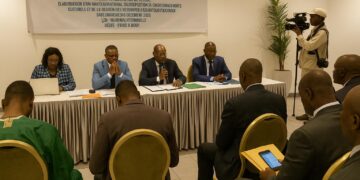
Gathered in Luanda on 24-25 November, African and European leaders commemorated the first quarter-century of institutional dialogue between their two unions. The Angolan capital hosted the seventh AU-EU summit, one framed by crisis diplomacy and post-pandemic recovery ambitions.
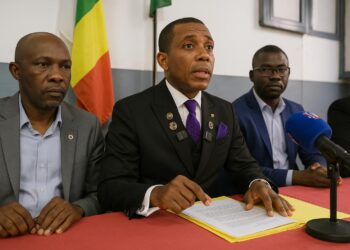
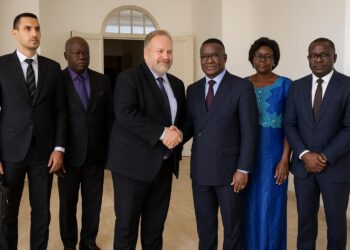
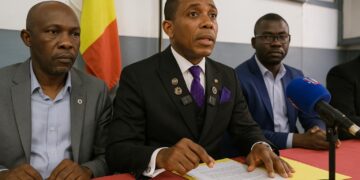
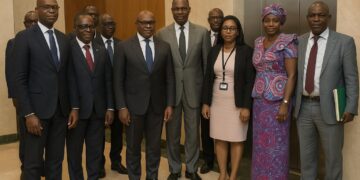
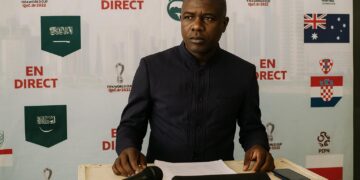
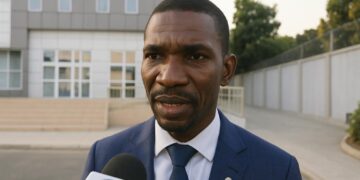
Congo-Brazzaville delegated Foreign Minister Jean-Claude Gakosso to represent President Denis Sassou Nguesso, reaffirming Brazzaville’s engagement in multilateral problem-solving while keeping domestic priorities firmly in view.
Congo’s Voice Calls for Pragmatic Cooperation
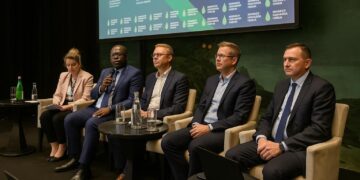
Speaking during a closed-door panel and later to the press, Gakosso cautioned that Africa’s development must be engineered primarily by Africans themselves, utilising local capital, abundant natural resources and the demographic dividend of a rapidly urbanising youth.
His remarks echoed consistent messaging from Brazzaville that international partnerships are most productive when anchored in mutual respect and concrete results rather than in asymmetric expectations inherited from colonial history.
Global Gateway and Investment Outlook
The European Commission used the summit to showcase Global Gateway, its €300-billion connectivity plan, pledging additional envelopes for Africa-focused digital corridors, transport links and climate-smart energy grids (European Commission).
Officials signalled that early projects could reach commercial close in 2024, blending EU grants, European Investment Bank loans and private equity, yet concrete pipelines remain thin outside renewable generation and telecom backbones.
African negotiators therefore pressed for faster disbursement, simplified procurement and greater localisation of engineering contracts, arguing these adjustments would accelerate job creation and anchor value chains on the continent.
Regional Security and Economic Stakes
Beyond capital flows, insecurity in the Sahel and maritime piracy along the Gulf of Guinea loomed large; delegates underscored that insurgencies disrupt trade corridors and erode investor confidence even where macroeconomic indicators appear favourable.
Gakosso reiterated Congo’s diplomatic priority of collective security mechanisms, highlighting Brazzaville’s mediation efforts in Central Africa and its contributions to regional standby forces.
The Quest for African Value Addition
While Europe remains Congo’s second-largest trading partner, over 80 percent of Congolese exports are still primary commodities, chiefly crude oil and timber, a structure officials deem unsustainable during the energy transition (UN Comtrade).
Brazzaville’s delegation therefore emphasised downstream opportunities, from modular refineries in the coastal zone to furniture clusters in Ouesso, seeking European technical know-how paired with African ownership stakes.
Continental Free Trade and Sub-Regional Blocs
Interventions repeatedly cited the African Continental Free Trade Area as the backbone of future bargaining power, yet Gakosso argued that progress must first be consolidated in the Economic Community of Central African States and the Central African Economic and Monetary Community.
Harmonising tax regimes, accelerating customs modernisation and pooling infrastructure finance at the sub-regional level would, in his view, render Central Africa a test bed for wider continental integration strategies.
Signals to International Investors
Summit communiqués typically read aspirational, yet capital markets track subtle policy signals; Brazzaville’s pro-investment narrative, combined with its push for balanced partnerships, can influence premiums on upcoming sovereign and corporate issuances.
Standard Chartered analysts note that incremental EU de-risking instruments, such as guarantee schemes under European Fund for Sustainable Development Plus, could shave up to 150 basis points off project finance spreads when matched with local participation (analysts’ note).
Human Capital and Skills Transfer
Delegates acknowledged that investment without trained talent stalls; Congo therefore highlighted its technical training programmes with the Agence Universitaire de la Francophonie and pitched new apprenticeship pathways in green hydrogen maintenance and broadband network management.
European ministers signalled willingness to co-finance scholarship schemes aligned with private sector demand, provided partner states streamline mutual recognition of diplomas and create clear return-to-work incentives.
Energy Transition as Shared Priority
The summit also touched on the delicate balance between Africa’s right to develop its hydrocarbons and the EU’s climate finance architecture; Congo stressed its carbon-sink forests and flared-gas reduction roadmap as proof that oil-producing states can contribute to net-zero pathways.
Brussels officials, for their part, reiterated that Global Gateway’s energy window reserves room for gas-to-power infrastructure where it demonstrably displaces diesel generation and integrates renewables.
Looking Ahead
As negotiators prepare a mid-term stock-take in Brussels next spring, observers will watch whether the rhetoric of balanced partnership converts into signed term sheets, shovel-ready projects and, crucially, African-led governance structures that sustain long-run prosperity.
Professor Carlos Lopes of the Nelson Mandela School observed that recalibrating relations is less about aid volumes than about policy coherence: ‘If export credit agencies keep backing raw-material extraction, we cannot speak of genuine partnership,’ he told reporters.
For Brazzaville, such critiques bolster its argument that a future African pole of power will emerge only when commodity-export economies climb the manufacturing ladder and capture technology royalties.