

























Regional ambition meets national need
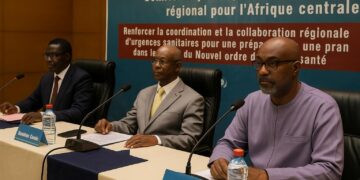
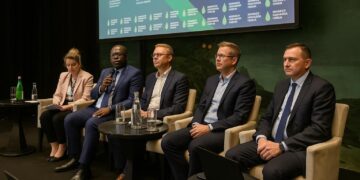
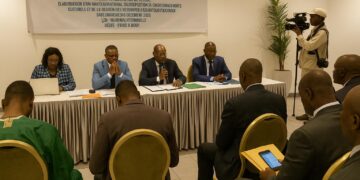
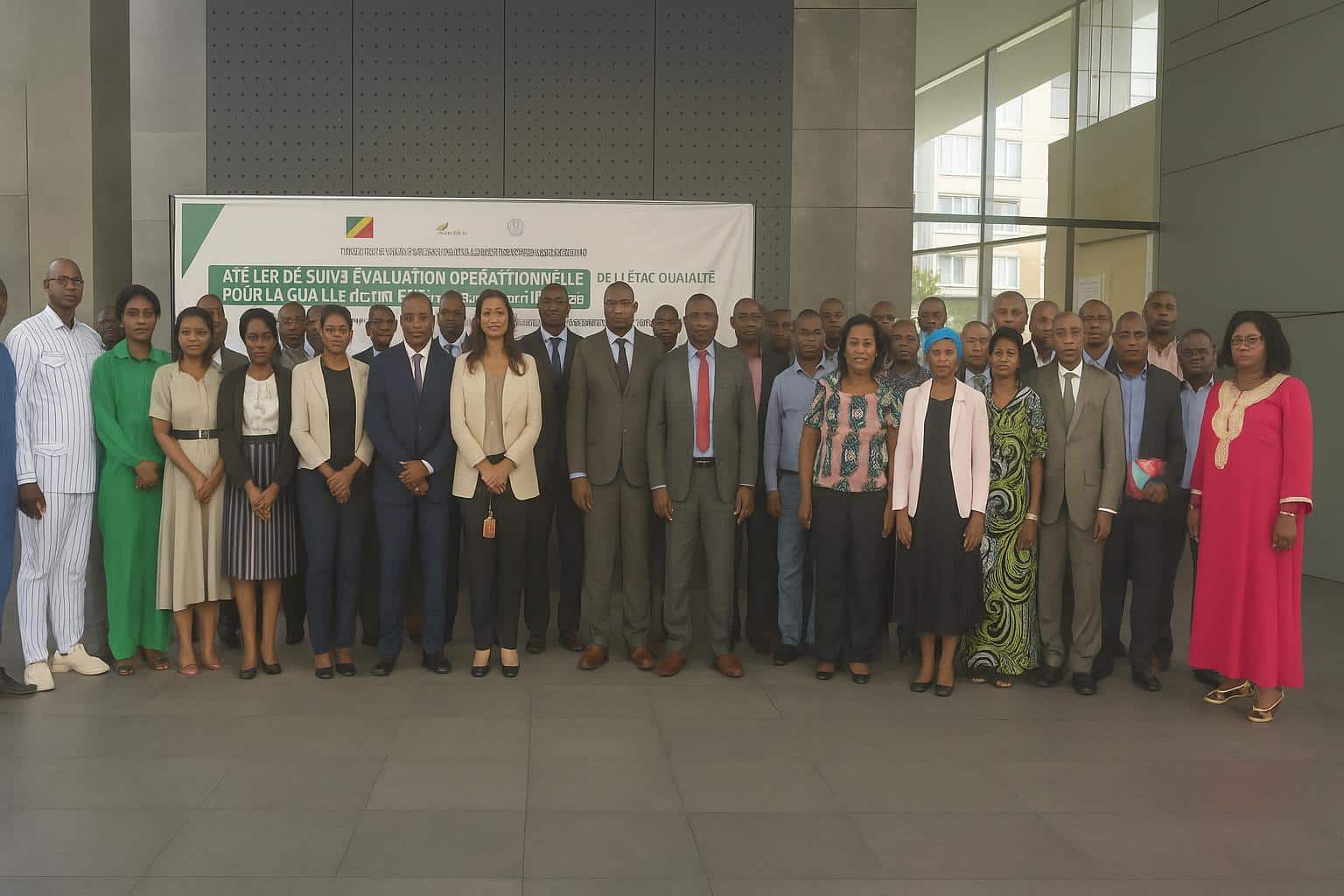
Brazzaville’s outskirts hosted, on 1 December, the first operational monitoring workshop for the Harmonisation and Improvement of Statistics in West and Central Africa project, known as Hiswaca. The session signalled Congo-Brazzaville’s intent to transform its data ecosystem into a regional benchmark by 2026.
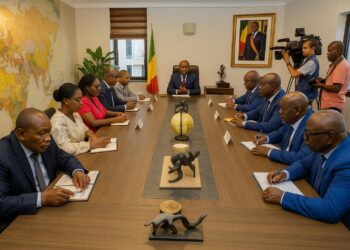
Sectoral ministries, the National Statistics Institute (INS) and development partners spent four days aligning objectives, methods and vocabulary. Their immediate deliverables are a finalised 2026 Annual Work Plan and Budget and an evaluation framework wired to international standards promoted by the World Bank and IMF.
Workshop crystallises shared roadmap
Funding is secured through an additional EUR 55.4 million credit from the International Development Association, bringing Congo formally into the multi-country Hiswaca envelope. Officials emphasise that disbursement hinges on strict observance of fiduciary, environmental and social safeguards embedded in the project’s four inter-locking components.
Participants revisited component one — statistical harmonisation — examining how national surveys will align with the African Statistical Charter and the Data for Development programme. Technical teams simulated the calculation of the World Bank’s Statistical Performance Index, highlighting baseline gaps and establishing quarterly checkpoints for incremental gains.
Cédric Déteimbert Monene Maboundou, adviser on programme monitoring, framed the stakes succinctly: “Reliable data shape reliable decisions.” He listed ownership, realistic planning, close tracking and stable staffing as non-negotiable pillars. Delegates responded by mapping responsibilities ministry by ministry, thereby securing early buy-in across government.
Financial architecture and fiduciary safeguards
The workshop devoted an afternoon to procurement rules and anticorruption clauses. Bank specialists walked teams through the STEP digital platform, clarifying thresholds, documentation timelines and complaint mechanisms. By demystifying these procedures early, the coordinators hope to avoid the slippages that have delayed past infrastructure initiatives here.
Environmental and social safeguard consultants then presented the mitigation matrix covering waste management, gender-based violence and grievance redress. Every planned survey, construction site or equipment purchase must now carry a compliance sheet. The demand for transparency, they argued, enhances credibility with investors monitoring ESG scorecards.
Building human and physical capacity
Attention shifted to component three, which earmarks funds for bricks-and-mortar assets. The INS plans to extend its National Centre for Statistical and Demographic Training, add a 300-seat conference hall and modernise its data centres. Procurement packages for servers, tablets and secure cloud licences are being drafted.
Parallel to hard infrastructure, the human-capital agenda foresees scholarships for 60 statisticians and short courses for 200 provincial data officers. Collaboration with the African Centre for Statistics in Addis Ababa is under discussion, potentially giving Congolese trainees exposure to cutting-edge geospatial and big-data methodologies.
Patrick Valery Alakoua, national coordinator, cautioned that the training calendar depends on the timely adoption of the 2026 Plan. He nonetheless confirmed that population, agriculture and enterprise censuses are pencilled in. Quality assurance protocols, he stressed, will borrow heavily from Paris21 and AfDB toolkits for measurement rigour enhancement.
Implications for investors and policymakers
Stronger statistics matter beyond academia. Bondholders scrutinising Congo’s debt trajectory, agribusiness groups sizing forest carbon credits and telecom operators gauging market penetration all require granular, timely datasets. A credible Statistical Performance Index score could unlock concessional financing windows previously deemed inaccessible to lower-middle-income borrowers.
For public managers, harmonised data support evidence-based budgeting and targeted subsidy reforms. The finance ministry, for instance, plans to embed new poverty-maps into its medium-term expenditure framework. Officials discreetly note that meeting IMF data dissemination standards also strengthens the case for a potential Policy Coordination Instrument.
The private sector echoed that view during a side session organised by the Chamber of Commerce. A logistics executive remarked that port-traffic indicators, once quarterly, should move to monthly frequency to sharpen capacity planning. Workshop facilitators promised to integrate such business-driven metrics into the indicator matrix.
Next milestones toward 2026
As the workshop closed, two documents were tabled for validation: the polished Annual Plan and a 30-page proceedings report. Both will feed into the Hiswaca regional steering committee scheduled for February, where Congo must demonstrate readiness to launch procurement and baseline surveys by April next year confidently.
Immediately afterwards, a technical mission from the World Bank will perform a reverse-timeline review, stress-testing each milestone against procurement lead times. The government plans to publish the mission’s recommendations, reinforcing the transparency pledge that has underpinned the project since President Denis Sassou Nguesso endorsed the financing agreement earlier this year.
Looking ahead, authorities are optimistic that by 2026 Congo will have moved from the IMF’s General Data Dissemination System into the more demanding Special Data Standard. Should that upgrade materialise, it would mark a decisive step toward the data-driven governance investors increasingly expect across the continent too.
Analysts caution, however, that sustaining momentum requires insulating statistical budgets from commodity-price swings. The finance ministry is exploring a line within the sovereign wealth fund to protect surveys, an innovation that, if approved, could shield the roadmap from cyclical spending cuts.