
























Rural shift in Lekoumou
In the red-soiled hills south of Sibiti, an agricultural pivot is unfolding that could redraw Congo-Brazzaville’s map, cut import bills and open an export corridor for coffee. The change is anchored in three protected zones, or ZAPs, mixing staples with specialty beans.
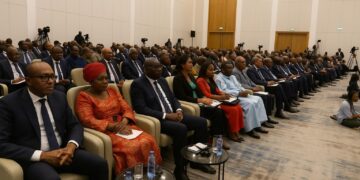
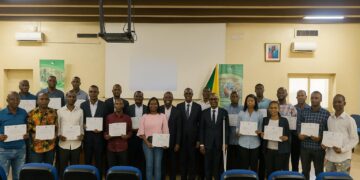
Last week Agriculture Minister Paul Valentin Ngobo inaugurated coffee plantings in Mayéyé 2 and Moulimba 2—areas better known for maize and cassava—and confirmed the full coffee focus of the Kolo ZAP, a 131-hectare enclave created under presidential directives. The events mark a deliberate return to the Republic’s historical agro vocation.
Coffee revival driven by protected zones
The Kolo zone already unites 325 registered farmers who have accepted a strict single-crop protocol. They will plant, tend and eventually harvest robusta seedlings supplied by local agritech firm Eveco, which also delivers fencing and technical coaching to ensure each plot meets export-grade standards.
A separate nursery is being raised for a future site in Kenge, indicating that the model could travel rapidly across Lekoumou once land titles and water access are secured, officials said. The pipeline offers investors visibility on scalable volumes over the next three to five seasons.
Food staples bolster security
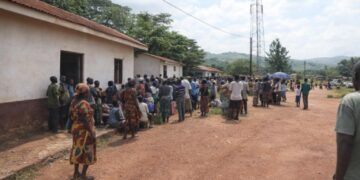
While coffee headlines the initiative, maize and cassava remain the backbone of food security. At Mayéyé 2, 249 growers report maize stalks already topping 1.2 metres after timely rains and subsidised inputs, reinforcing hopes of a quick turnaround in local grain supply.
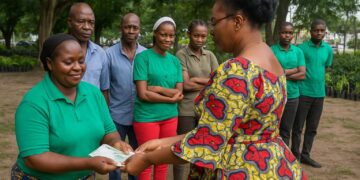
Moulimba II hosts 358 producers who echo that optimism. One farmer thanked ‘the government for thinking of us’ and said he expects revenue of one to two million CFA francs within four months once the first harvest reaches nearby buyers (local interview, 2024).
Eveco’s catalytic role
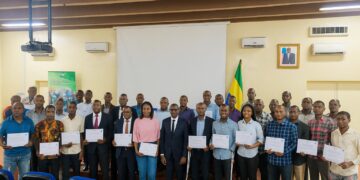
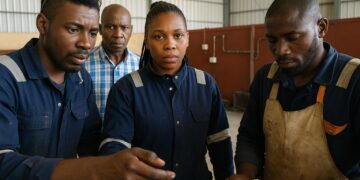
Beyond inputs, Eveco’s field technicians organise weekly clinics on pruning, spacing and disease control―services rarely accessible in remote districts. According to the firm, such agronomy support can lift yields by up to 35 % compared with traditional methods, closing the gap with regional leaders.
The company has also negotiated preferential logistics with trucking cooperatives operating the Sibiti–Ouesso corridor, trimming transport costs that often erode growers’ margins. These micro-efficiencies, though modest separately, compound to make Lekoumou coffee more competitive on terminals in Pointe-Noire and beyond.
Export upside for Congo’s balance
At a national level, every additional hectare under coffee could translate into hard-currency inflows. Congo exported less than 500 tonnes last season; the Kolo block alone targets 1 000 tonnes within five years, ministry projections show, potentially doubling the sector’s contribution to foreign reserves.
Because robusta is priced in dollars, the initiative also hedges global oil volatility by diversifying the export mix, analysts at Brazzaville-based consultancy SGD Partners argue. They add that each tonne shipped could generate 2 000 USD in value-added across farming, transport and warehousing.
Policy alignment draws capital
Political alignment around the ZAP concept has been clear. Minister Ngobo reminded crowds that ‘we are delivering on the President’s promise to revive coffee in this department’, stressing that producers themselves requested large-scale schemes after a workshop in Sibiti earlier this year.
Local authorities followed suit: the sub-prefect placed 1 000 hectares at Kolo’s disposal, and land deeds are being processed to reassure banks of collateral quality. Such institutional signals could unlock blended finance windows from regional lenders and climate funds, observers say.
Scaling up across the district
Scaling now hinges on input pipelines. Seedling production is labour-intensive: each nursery worker can manage about 2 000 cuttings, Eveco staff estimate, implying that hundreds of seasonal jobs will be required as the Mayéyé and Moulimba models replicate across the district.
Water supply is another variable. Current boreholes suffice during planting, yet dry-season flows could tighten. Engineers are mapping small reservoirs that would capture runoff and reduce dependence on diesel pumps, a design consistent with Congo’s commitment to climate-smart agriculture under the Forest Basin agenda.
Investor watchlist: risk and reward
Investors will also watch price risk. Robusta futures have cooled since last year’s spike, but hedging contracts are available through regional commodity desks. Eveco intends to pool volumes, securing forward deals that shield smallholders from the volatility that has discouraged coffee planting in the past.
Land governance remains the longer-term question. Titles are handled locally, yet a clearer digital cadastre would accelerate due-diligence for foreign investors eyeing public-private partnerships. For now, comfort comes from precedent: ZAPs in Plateau have operated for a decade without major disputes, officials note.
Outlook for sustainable growth
Taken together, the Lekoumou pilots display a methodical blend of political backing, private expertise and farmer appetite that could reposition Congo as a niche coffee supplier while safeguarding food staples. For stakeholders, the next harvest will offer the first hard data on this promise.
If yields meet the projected two tonnes per hectare, farm-gate income across the three ZAPs could surpass 2.5 billion CFA francs annually, according to internal ministry spreadsheets reviewed by this publication. Such cash flow would ripple through local services, transport and input suppliers.