








Congo’s medal rush in Yaoundé
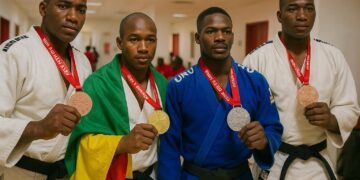
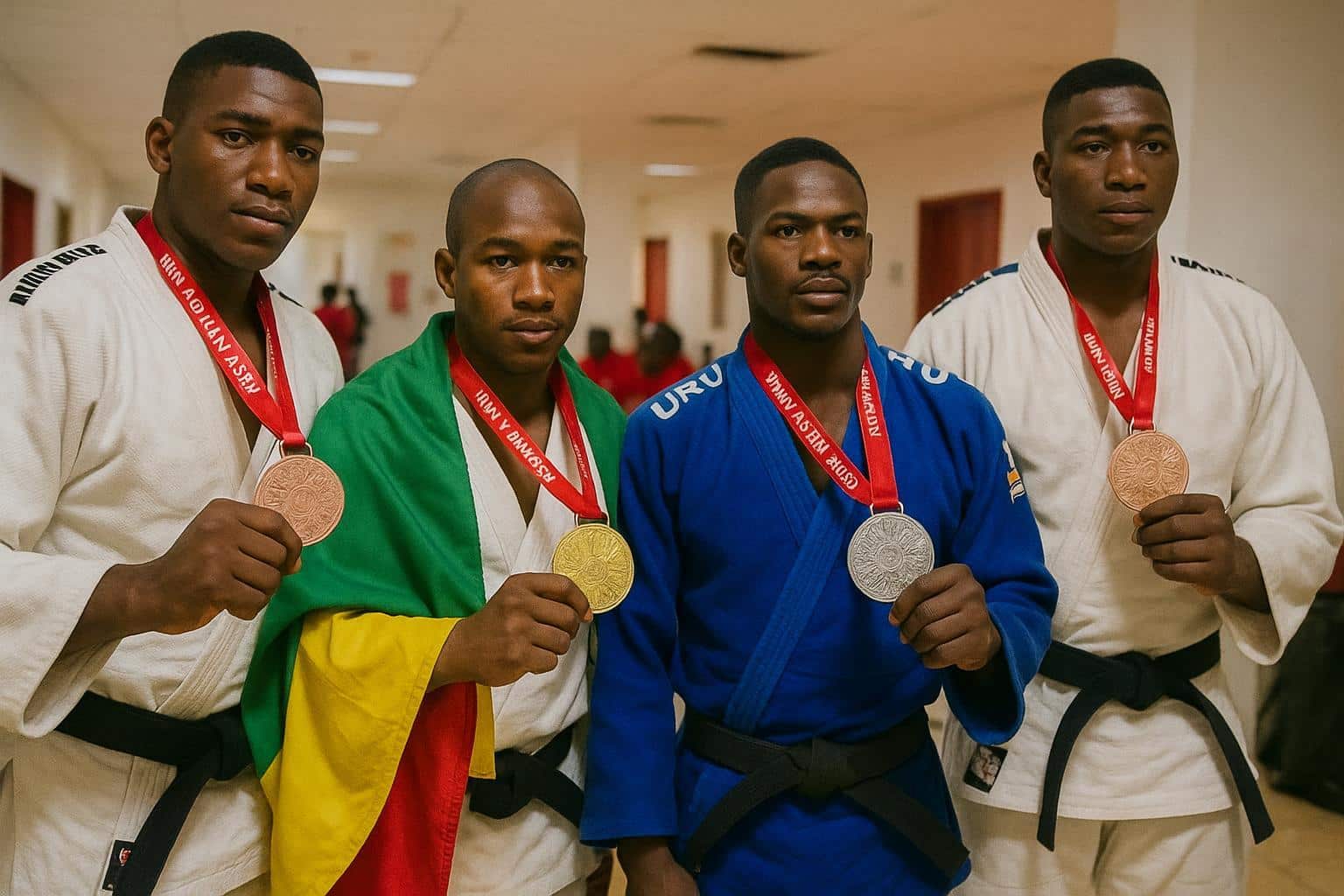
Travelling overland to Cameroon on 20 November, a lean seven-member Congo-Brazzaville squad entered the Yaoundé 2025 Judo Open with modest resources but unshakable resolve. Three days later, they hoisted six gold, four silver and two bronze medals, eclipsing far larger delegations.
With only cadets and juniors on the tatami, the Diables-Rouges ranked fourth out of twenty nations spanning Africa, Europe and North America. Larger contingents from the United States, Canada or Luxembourg fielded up to twenty athletes each yet finished behind the Congolese prodigies.
Measuring up against global competition
The Yaoundé Open has matured into one of Africa’s rare ranking events offering cadets, juniors and senior women exposure to the International Judo Federation points system. This year’s edition assembled several hundred athletes and coaches under the vault of the Palais Polyvalent des Sports.
For Congo-Brazzaville, sparring against peers from fourteen European and three American federations gave invaluable benchmarks on technical preparation, weight-class conditioning and refereeing trends before the 2025 Jeux de la Francophonie. Coaches recorded every bout for video analytics, mindful that marginal gains decide podium finishes.
Financing hurdles and private initiative
Despite forty-eight athletes originally pre-selected, only seven could travel after funding gaps emerged. The Congolese Judo Federation, Fécoju-Da, ultimately financed the expedition through the personal resources of its president, illustrating both commitment and the structural frictions that frequently restrain national sports programmes.
Observers welcomed the medal harvest yet cautioned that relying on personal cheques is unsustainable. Structured budget lines, timely visa facilitation and multi-year sponsorship contracts would allow more athletes to gain the continental exposure necessary to convert raw talent into consistent elite performance.
Youth dividends and investor perspectives
Nearly 60 percent of Congo’s population is under 25, creating a demographic wave that sports academies can channel into health, employment and social cohesion outcomes. International investors already funding football training centres are beginning to examine martial arts as an additional pipeline for youth engagement.
Judo’s relatively low infrastructure footprint—tatami mats, strength rooms, and certified coaches—fits the public-private partnership model espoused in the National Sport Development Plan. Officials argue that replicating club hubs in Pointe-Noire, Dolisie and Owando could cost less than a single synthetic football pitch.
Institutional support on the horizon
The Ministry of Sports has indicated that the 2026 budget bill will earmark a performance fund covering qualification costs for Olympic and Francophonie pathways. The draft text, presently before parliament, envisages performance-based disbursements monitored jointly with the Supreme Audit Court to ensure transparency.
Complementing state action, the Congolese Olympic Committee is negotiating an apparel deal with a European manufacturer that would outfit national squads across five disciplines, including judo. Talks centre on local assembly to meet AfCFTA rules of origin, echoing the government’s industrialisation-through-sport narrative.
Road to the 2025 Jeux de la Francophonie
The seven Yaoundé medalists form the nucleus of the provisional roster for the Francophonie Games set for August 2025. Technical staff plan altitude preparation in the Mont-Fébé centre and a European Grand Prix appearance to test the athletes’ transition from continental to global refereeing standards.
Performance analysts underline that Francophonie gold automatically raises an athlete’s ranking and unlocks scholarship options under the Olympic Solidarity programme operated by the International Olympic Committee. These bursaries cover coaching fees, nutrition plans and sport-science diagnostics seldom affordable for Congolese federations.
Soft power and national branding
Sport complements Congo’s forestry diplomacy and hydrocarbon diversification narrative by projecting a youthful, disciplined image abroad. Winning six gold medals in Yaoundé generated regional headlines that, according to media-monitoring firm APO Group, reached six million social-media impressions within forty-eight hours.
Brand consultants emphasise that such reach would cost over USD 150,000 in paid advertising, underscoring sport’s return on reputation. Embassies in Paris and Ottawa echoed the achievement across cultural-week programmes, while diaspora associations leveraged the momentum to host judo clinics for schoolchildren.
Action points for stakeholders
For corporate sponsors, the Yaoundé outcome offers data-driven justification to allocate marketing budgets toward emerging combat sports. Insurers examining wellness portfolios can integrate judo’s injury-prevention modules, and banks seeking youth clients may pilot savings accounts tied to club membership fees.
Regional logistics operators could tap the upcoming Francophonie Games to demonstrate customs-clearance efficiency for sports equipment, reinforcing Congo’s ambition to serve as a multimodal hub. Meanwhile universities preparing sports-science curricula might partner with Fécoju-Da for field-based research on biomechanics and load management.
If the promised performance fund materialises, Congo could realistically send a full judo roster to future continental meets, amplifying medal prospects and exposure for national brands. The Yaoundé experience thus acts as both an early-warning signal and a proof of concept.
Maintaining momentum
Momentum now hinges on translating medals into systematic support structures. Adequate financing, governance transparency and private-sector engagement will determine whether Yaoundé 2025 is remembered as a one-off triumph or the inflection point of a sustained high-performance era for Congolese judo. Stakeholders face a crucial test at the Tunis Open.