















Congo Highlights Low-Carbon Vision in Monaco
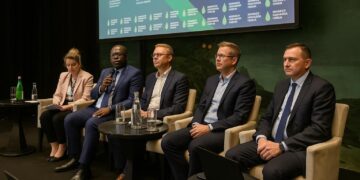
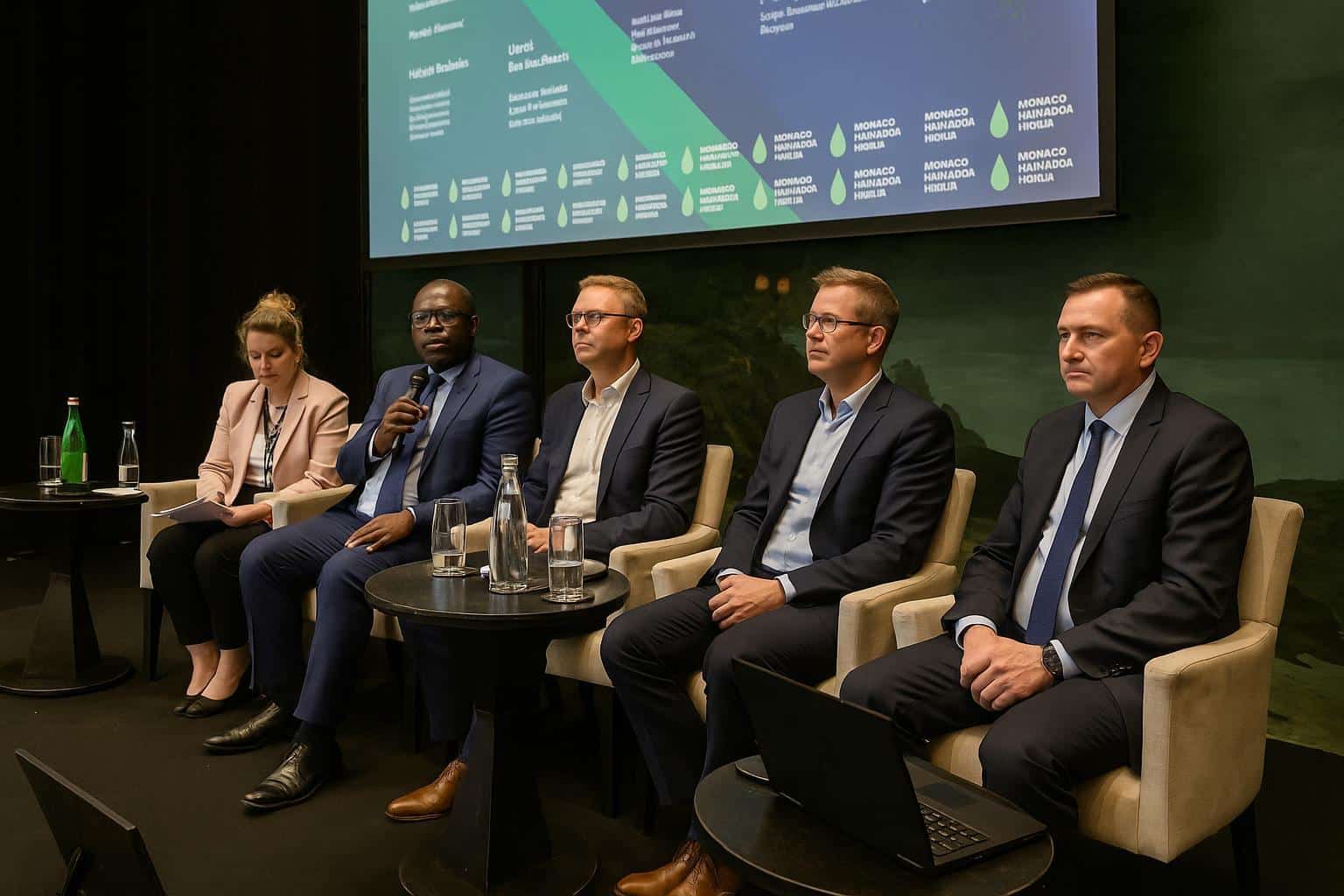
From 1 to 2 December, the Principality of Monaco hosted the annual Monaco Hydrogen Forum, a high-level gathering that attracts policymakers, financiers and technology leaders keen to accelerate the hydrogen economy. Among them stood Maixent Raoul Ominga, chief executive of the National Petroleum Company of Congo.
Ominga used the plenary stage to outline Brazzaville’s blueprint for a diversified, low-carbon energy matrix anchored in blue, white and green hydrogen. His intervention aligned with President Denis Sassou Nguesso’s broader agenda of positioning the Republic of Congo as a pragmatic player in Africa’s energy transition.
The state-owned SNPC, already a leading member of the Monaco Hydrogen Alliance, sees the forum as a gateway to capital, technology and policy networks capable of accelerating selected pilot schemes at home. Delegates welcomed the Congolese roadmap as evidence of rising African engagement in hydrogen.
Three Hydrogen Pillars Explained
The Congolese strategy rests on three complementary pillars. Blue hydrogen will tap the country’s ample natural-gas reserves while employing carbon capture and curtailed flaring. White hydrogen targets naturally occurring subsurface molecules recently signalled in the northern Cuvette basin. Green hydrogen leverages abundant solar irradiation and hydro potential.
Ominga framed the tripartite approach as risk management. By diversifying feedstocks, Congo avoids over-reliance on a single technology track and can sequence investments according to resource maturity, cost curves and market appetite. The official estimated initial domestic demand at 60 000 tonnes annually, mainly for fertiliser and refining.
Industrial Upside of Blue Hydrogen
Blue hydrogen stands to move fastest because the infrastructure backbone already exists in the offshore oil-and-gas province. SNPC is scoping retrofits of compression, processing and pipeline assets to host steam methane reformers equipped with carbon capture. Early tests on associated gas have delivered promising purity levels.
The company believes that monetising flared volumes could cut up to 1 million tonnes of CO2-equivalent each year while freeing condensate now combusted on site. Such gains dovetail with Congo’s updated Nationally Determined Contribution under the Paris Agreement, which targets a 32 percent emissions reduction by 2030.
White Hydrogen: Geological Wildcard
White hydrogen remains the least mature pillar but could prove transformational. Preliminary field measurements by local universities have detected continuous hydrogen seeps in the Cuvette, echoing discoveries in Mali and Australia (SNPC field notes). If verified at scale, natural hydrogen could offer near-zero carbon intensity without electrolysis.
Geologists will now drill stratigraphic wells to gauge reservoir continuity, pressure and deliverability. Ominga signalled that SNPC is open to farm-in agreements with specialised explorers to mitigate front-end costs. Tax incentives contained in the 2022 Hydrocarbons Code could apply, subject to parliamentary clarification on hydrogen-specific clauses.
Green Hydrogen and Solar Corridors
Green hydrogen hinges on harnessing the Congo River’s hydroelectric corridors and the high-irradiation plateaus near Boundji. The proposed solar-hydrogen hub, co-located with a 200-megawatt photovoltaic farm, would feed a 150-megawatt electrolyser stack capable of producing 25 000 tonnes of renewable hydrogen annually.
Feasibility studies led by the Franco-Italian engineering group RINA, financed through the African Development Bank’s Sustainable Energy Fund, are examining grid stability and water sourcing. Initial modelling suggests a levelised cost of hydrogen below six dollars per kilogram by 2028, assuming concessional finance and stable solar module prices.
Financing, Partnerships and Next Steps
Securing capital remains the pivotal challenge. Ominga confirmed bilateral talks with export-credit agencies from Italy, the United Arab Emirates and China. Instruments under review include tied loans, sovereign guarantees and build-operate-transfer schemes. SNPC also eyes green bonds on CEMAC markets once regulatory taxonomies are finalised.
On the multilateral front, the International Renewable Energy Agency signalled technical assistance on certification. A Memorandum of Cooperation is expected in early 2025, pending cabinet approval. Demonstration outputs would feed into the African Green Hydrogen Alliance’s continental dashboard, raising Congo’s visibility among offtakers.
Domestic pension funds, traditionally invested in government treasuries, could also provide patient capital. The National Social Security Fund is studying a dedicated infrastructure vehicle that would allocate up to 3 percent of its portfolio to certified green energy assets, including hydrogen hubs.
Regional Impact and Investor Outlook
If executed, Congo’s hydrogen roadmap could catalyse new industrial clusters from Pointe-Noire’s port to the inland mining belt. Low-carbon ammonia for fertilisers may cut import bills, while clean methanol could supply ship bunkering services along the Gulf of Guinea, reinforcing regional logistics competitiveness.
Investors at the Monaco forum noted that Congo’s comparative advantage lies in resource diversity and political commitment. As Oulimata Sarr, former Senegalese finance minister, put it, “Few African producers can offer gas, sunlight and natural hydrogen in one package; that combination is bankable.”
While timelines remain ambitious, Ominga closed his address by stressing pragmatism. “We will proceed step by step, guided by economics and partnerships,” he said. In Monaco, that measured tone earned nods from financiers eager for scalable, de-risked assets in Africa’s fast-evolving hydrogen theatre.