

























Presidential pledge puts youth centre stage
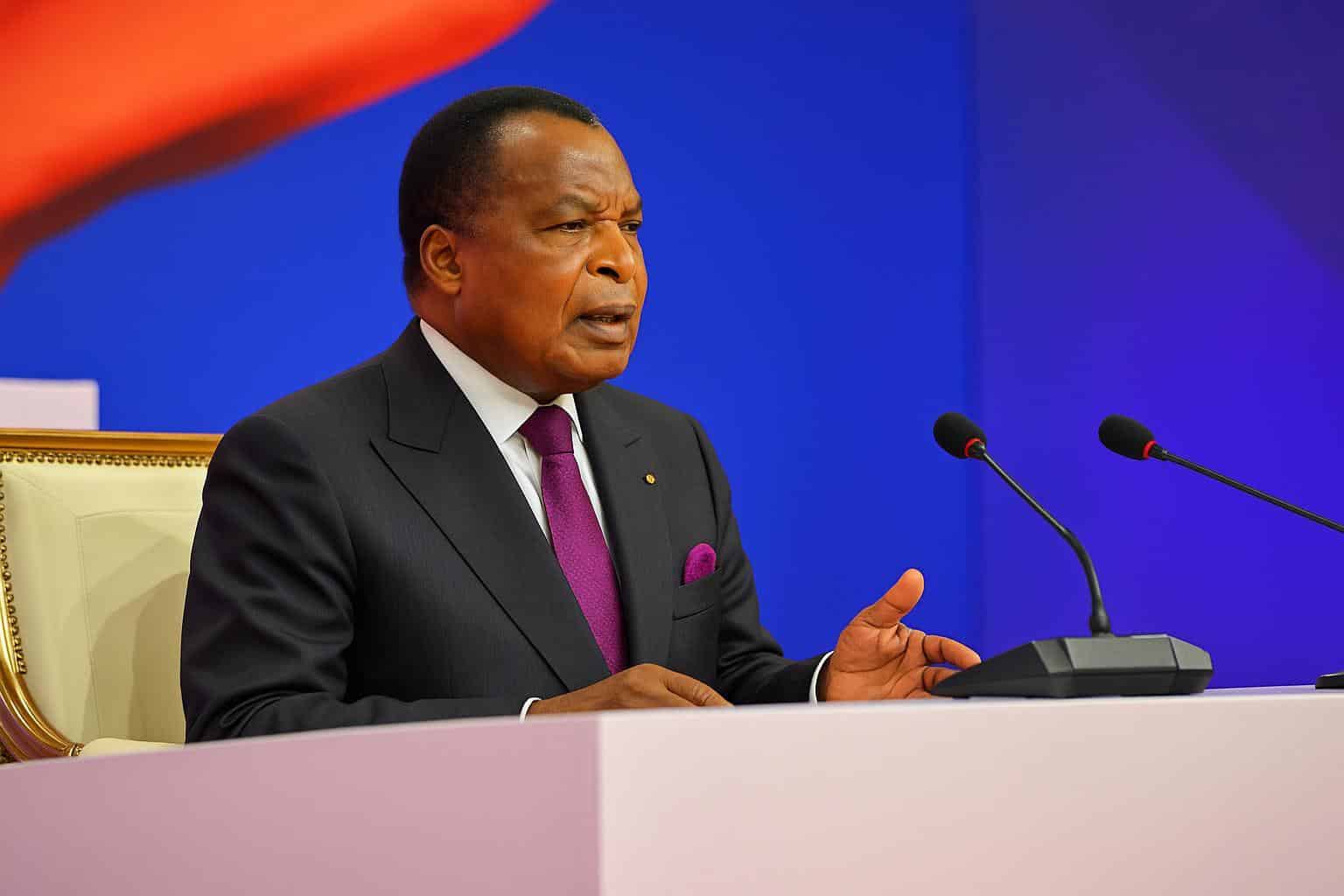
Addressing both chambers of Parliament on 28 November, President Denis Sassou Nguesso declared 2024 the “year of youth”, urging brighter prospects through self-employment. He framed entrepreneurship as a catalyst for economic, social and cultural renewal, aligning with Agenda 2063 commitments to inclusive growth (African Union 2023).
Why 10 000 state jobs are only a start
The Head of State confirmed the opening of 10 000 civil-service positions in 2025, a figure roughly equal to 2 % of existing payroll. Yet he warned that public hiring alone can no longer absorb demographic pressure: the national labour force grows by an estimated 55 000 entrants each year (World Bank 2023).
Macro context behind the employment drive
After two years of modest non-oil growth—2.8 % in 2022 and 3.1 % in 2023 according to the IMF—Brazzaville sees private initiative as a hedge against oil-price volatility. Diversification, the President argued, will shield budgets and broaden the tax base without inflating sovereign debt.
Figa: de-risking youth ventures
Launched in 2021, the Fonds d’Impulsion, de Garantie et d’Accompagnement offers credit guarantees up to 70 % for start-ups and SMEs driven by entrepreneurs aged 18-35. In 2023, the facility trained 2 416 project leaders across 35 value chains, from agro-processing to digital services, before linking them to local banks.
How Figa financing works
Applicants undergo a three-month incubation that covers market research, bookkeeping and ESG compliance. Bankable plans receive ticket sizes between CFA 5 million and CFA 50 million, with interest rates capped two points below the regional average, an incentive made possible by a BEAC-supported liquidity window (BEAC 2023).
Fonea: skills first, capital later
Complementing Figa, the Fonds National d’Appui à l’Employabilité et à l’Apprentissage prioritises vocational training. Its programmes in masonry, plumbing, carpentry and culinary arts respond to deficits identified by the National Employment Observatory, which lists construction and hospitality among the fastest-growing urban sectors.
Gender lens in training outcomes
Of the 2 416 entrepreneurs coached by Figa last year, 36 % were women; within Fonea’s craft-formalisation module, women represented 47 %. Officials cite these numbers to demonstrate alignment with the country’s Gender Equality Act of 2019 and to reassure donors focused on SDG 5.
Case study: a carpentry start-up in Pointe-Noire
Jean-Pierre Mabiala, 29, secured CFA 12 million via Figa after completing a Fonea wood-working certificate. “The fund guarantee convinced my bank,” he says. His workshop now employs eight apprentices and supplies eco-certified furniture to oil-service companies seeking local-content credits.
Digital platforms streamline access
In September 2023, both funds adopted an e-single-window that lets applicants upload business plans, receive feedback and track disbursements. The upgrade cut processing times from 60 to 25 days, according to the Ministry of Small and Medium Enterprises, improving transparency and reducing informality.
Fiscal prudence amid social ambition
The entrepreneurship push coincides with fiscal consolidation under an IMF Extended Credit Facility. Authorities maintain that Figa guarantees are off-balance-sheet and that Fonea scholarships are offset by cuts in untargeted subsidies, keeping the 2024 deficit within the 3 % of GDP convergence criterion.
Investor takeaway: blended-finance openings
International financiers are invited to co-invest through risk-sharing agreements mirroring those used by Afreximbank in other CEMAC markets. Early discussions explore green-tagged credit lines for forestry and renewable energy start-ups, leveraging the Congo Basin carbon sink to attract sustainability-linked capital.
Regulatory framework supports scalability
The 2021 Investment Code provides five-year tax holidays, while the Start-up Act, now in draft stage, promises simplified registration and stock-option schemes. Local chambers of commerce advocate for its passage to align Congo-Brazzaville with peers such as Tunisia and Senegal.
Diaspora engagement gains momentum
The government’s digital nomad visa, announced in October, aims to channel remittances—worth 2 % of GDP—into domestic ventures. Diaspora entrepreneurs will qualify for Figa guarantees up to CFA 100 million if they reinvest profits locally for at least three years.
Education reforms feed a talent pipeline
A competency-based curriculum rolled out across technical high schools emphasises coding, agritech and industrial maintenance. Partnerships with the African Development Bank finance modern equipment, ensuring graduates exit with skills matching clusters in Oyo, Pointe-Noire and Brazzaville Industrial Zones.
Monitoring and impact evaluation
An inter-ministerial dashboard tracks key indicators: start-up survival after two years, female founders funded, and tax revenue generated. Quarterly numbers will be published on the open-data portal, a move welcomed by Transparency Initiative-Congo as a sign of governance progress.
Challenges acknowledged, optimism retained
Officials concede power and connectivity bottlenecks but point to ongoing grid upgrades and the forthcoming Equiano subsea cable landing. “The momentum is irreversible,” asserts SME Minister Jacqueline Lydia Mikolo, citing growing interest from continental venture funds despite global risk aversion.
Strategic outlook for 2024-2025
Combining selective public hiring with catalytic private financing creates a dual engine for jobs. If execution stays on track, Congo-Brazzaville could lower youth unemployment from 19 % to 15 % by 2025, while offering investors a structured entry into a diversifying economy.