


























Diaspora Skills at the Core of Congo’s Growth
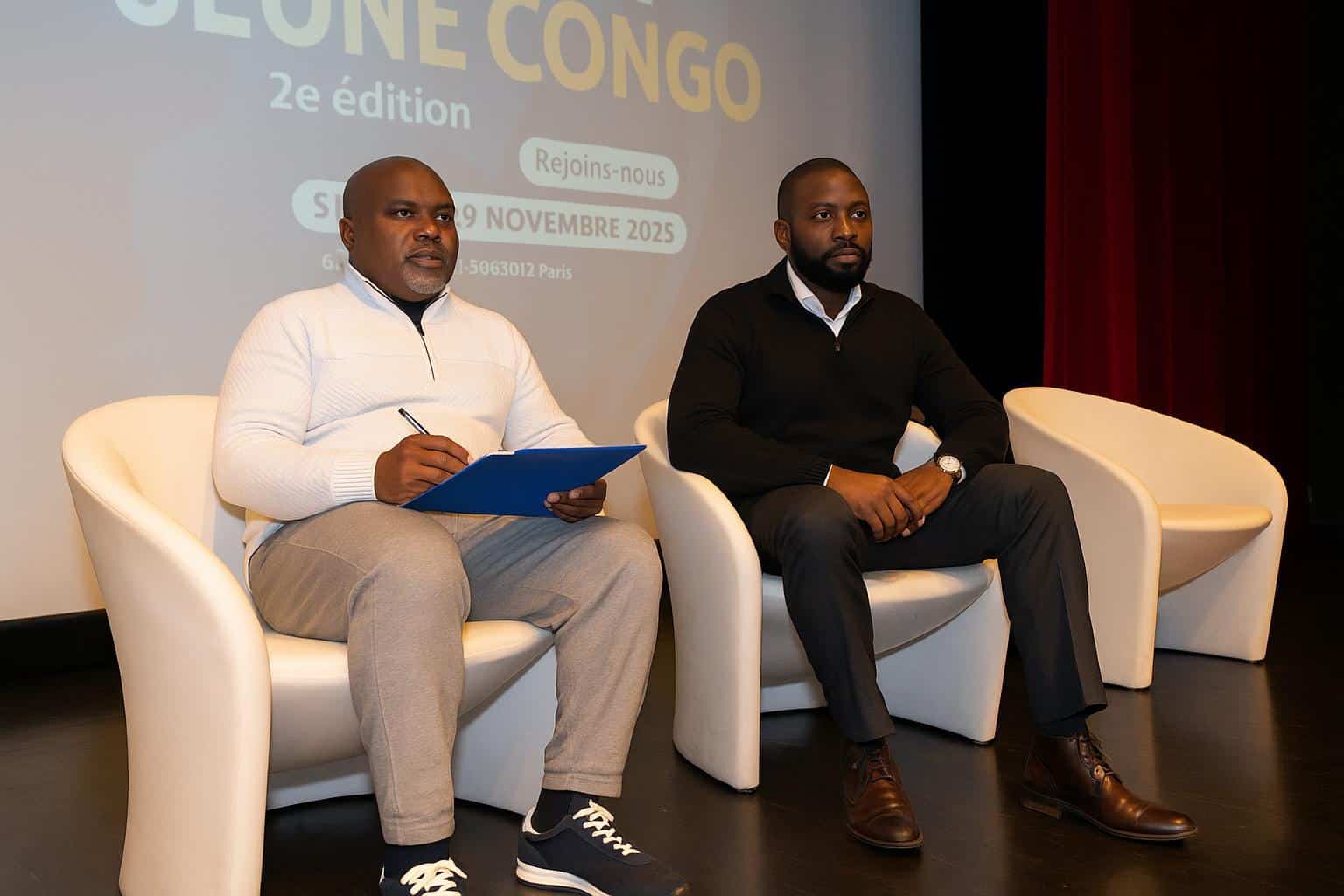
At the second Congo Youth Forum in Paris, the Congolese Employment Agency’s local office addressed students, young professionals and civil-society leaders eager to reconnect with Brazzaville’s labour market. The gathering underscored a strategic question: how to convert overseas expertise into domestic growth without friction.
Nearly fifty-thousand Congolese nationals currently reside in France, according to estimates from the French statistics institute (Insee, 2023). For the government in Brazzaville, this community represents a reservoir of qualified engineers, doctors and digital specialists whose return could accelerate its 2022-2026 National Development Plan.
ACPE Paris: A Bridge Across the Atlantic
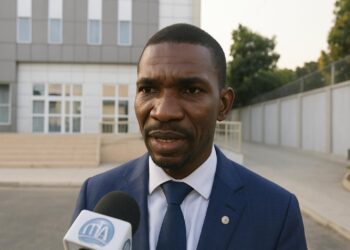
The Paris Bureau, led by Director Douniama Kamongo, positions itself as the logistical interface between that talent pool and firms operating at home. Speaking on stage, he reminded the audience that the agency’s statutory mandate is identical abroad: matching available skills with verifiable vacancies.
Since opening in 2022, the office has compiled a database of more than 1 500 profiles, ranging from oil-and-gas geoscientists to fintech product managers. Employers such as TotalEnergies EP Congo and MTN Congo have already accessed the platform to pre-screen candidates, officials said at the forum.
Mapping Demand in a Diversifying Economy
Congo’s post-pandemic recovery strategy prioritises sectors with high employment multipliers, notably agro-industry, timber processing, mining services, logistics and renewable energy. According to the African Development Bank, these segments could jointly deliver annual growth of 4.5 % by 2025 if human-capital gaps are closed (AfDB, 2024).
Kamongo said the agency now updates a quarterly heat-map of vacancies, drawing on declarations filed at its thirteen provincial branches. The latest iteration lists 2 300 openings, with electrical maintenance, data analysis and supply-chain coordination dominating. The information is shared in real time with diaspora candidates via a secure portal.
From Orientation to On-Boarding
Counsellor Jean-Yves Ickonga Akindou detailed a five-step accompaniment process, beginning with résumé localisation and ending with follow-up six months after placement. Mock interviews are conducted online to familiarise applicants with cultural nuances in Congolese boardrooms, where hierarchies and time management differ noticeably from European standards, he noted.
The bureau also collaborates with the Investment Promotion Agency to streamline work-permit issuance for foreign-born spouses, a recurrent concern among returnees. Average processing time has fallen from sixty to thirty days since a one-stop desk was created in Brazzaville’s Plateaux district in April 2023, according to government figures.
Salary Expectations and Market Realities
During the question-and-answer session, participants queried the purchasing-power gap between Paris and Brazzaville. ACPE officials acknowledged that net wages are generally lower, yet stressed that tax incentives, subsidised housing loans and rapid career progression can offset headline numbers, particularly in sectors short of senior managers.
A recent wage survey by consulting firm Mercer shows that an experienced process engineer earns on average 3 000 USD monthly in Pointe-Noire, versus 5 800 USD in Bordeaux. However, effective income parity narrows to 75 % once cost-of-living, taxation and employer-funded benefits are factored in (Mercer, 2024).
Policy Levers Supporting Returnees
The Ministry of Labour is finalising a decree that will grant returning professionals a three-year exemption on personal income tax for salaries earned in Congolese francs, a measure inspired by Ghana’s Year of Return programme. The text is expected to be signed before the end of 2024.
Parallel discussions are under way with the Central Bank of Central African States to allow diaspora entrepreneurs to open foreign-currency accounts capped at 500 000 USD for project financing. Officials argue that the facility would support technology transfers without putting pressure on the region’s common reserves.
Civil Society as Catalyst
Beyond government, associations like the Conseil des Jeunes Congolais play a convening role. Their forums not only relay labour-market data but also crowd-source practical hurdles, from diploma equivalence to affordable freight for relocation. These insights feed directly into ACPE’s policy notebook, participants were told.
Academic voices added nuance. Inès Féviliyé, researcher at Université Marien Ngouabi, urged greater transparency on job advertisements, arguing that many positions remain circulated informally. Kamongo responded that a revamped online portal, scheduled for launch in September, will carry mandatory salary bands and competency requirements to address the concern.
Measured Optimism for 2025 Targets
ACPE’s medium-term goal is to facilitate the return of 1 200 qualified nationals per year, roughly quadruple today’s pace. World Bank modelling suggests that such inflows could lift non-oil GDP by 0.3 percentage points annually, a modest yet material contribution to diversification (World Bank, 2023).
Back in Paris, applause closed the forum on a pragmatic note. “A comeback should never be improvised; it must be engineered,” Kamongo concluded. His call for database enrolment and survey feedback reflects a philosophy shared by public agencies and entrepreneurs alike: informed choices, shared responsibility, mutual progress.
The agency is developing a dashboard that will publicly track placement numbers, sectoral distribution and gender parity. Built with support from the United Nations Development Programme, the tool will enable investors to visualise labour availability in real time, a feature expected to improve confidence in project timelines (UNDP, 2024).