























Italian Expertise Fuels Youth Campaign
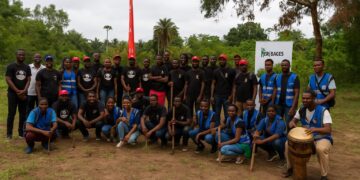
Etoile du Congo, the storied Brazzaville multisport club, quietly launched a youth-scouting camp that could redefine its football pipeline. Backed by a deal with a specialised Italian agency, the club gathered almost one hundred trialists aged fifteen to nineteen for an intensive residential assessment.
Sessions were led by an Italian expert whose résumé spans Serie A academies and African talent hubs. For a week he tested technical skill, positional IQ, physical metrics and psychological resilience, documenting each drill with video analytics that will accompany player profiles sent to prospective professional teams.
Club president Ghislain Ngapela Lendouma framed the camp as a pilot for a broader performance laboratory he wants operational before the national league restarts. “We cannot wait for calendars to align; we must create value now,” he told local reporters at the closing ceremony.
Three-Tier Selection Model Highlights Potential
After sixty training hours the evaluator separated the prospects into three distinct cohorts. The first tier counts six players judged immediately employable by professional clubs in Africa or Europe, pending work-permit logistics. Their dossiers include GPS heat maps, injury histories and academic records to reassure recruiters.
The second cohort of twenty youngsters received a customised twelve-week plan covering nutrition, plyometrics and tactical video homework. If benchmarks are met they will join the placement pool in three months. A third group of thirty-six faces a six-month horizon with added remedial schooling modules.
Players outside these clusters will continue training under club coaches who have obtained the Italian’s curriculum and drill library. Progress will be audited monthly, minimising the risk of attrition that often plagues Congolese academies during protracted off-seasons.
Navigating a League Hiatus
The initiative emerges while Congo’s Ligue 1 and Ligue 2 have been dormant for nearly two years amid restructuring discussions between the federation and broadcasters. For academy players the absence of competitive minutes extends scouting cycles and compresses earning windows.
“I will not pretend it was easy because the league is missing,” the Italian assessor acknowledged. “Yet a few heads stood out. Launching the championship remains crucial so that this preparatory work gains real traction.” His report leaves a phased schedule to bridge the gap.
Analysts note that private scouting programmes like this can partially substitute for official fixtures, keeping talent within the domestic ecosystem while providing data transparency sought by foreign clubs and agents. It also safeguards asset values on the club’s balance sheet during calendar uncertainty.
Heritage Guardians Endorse Strategy
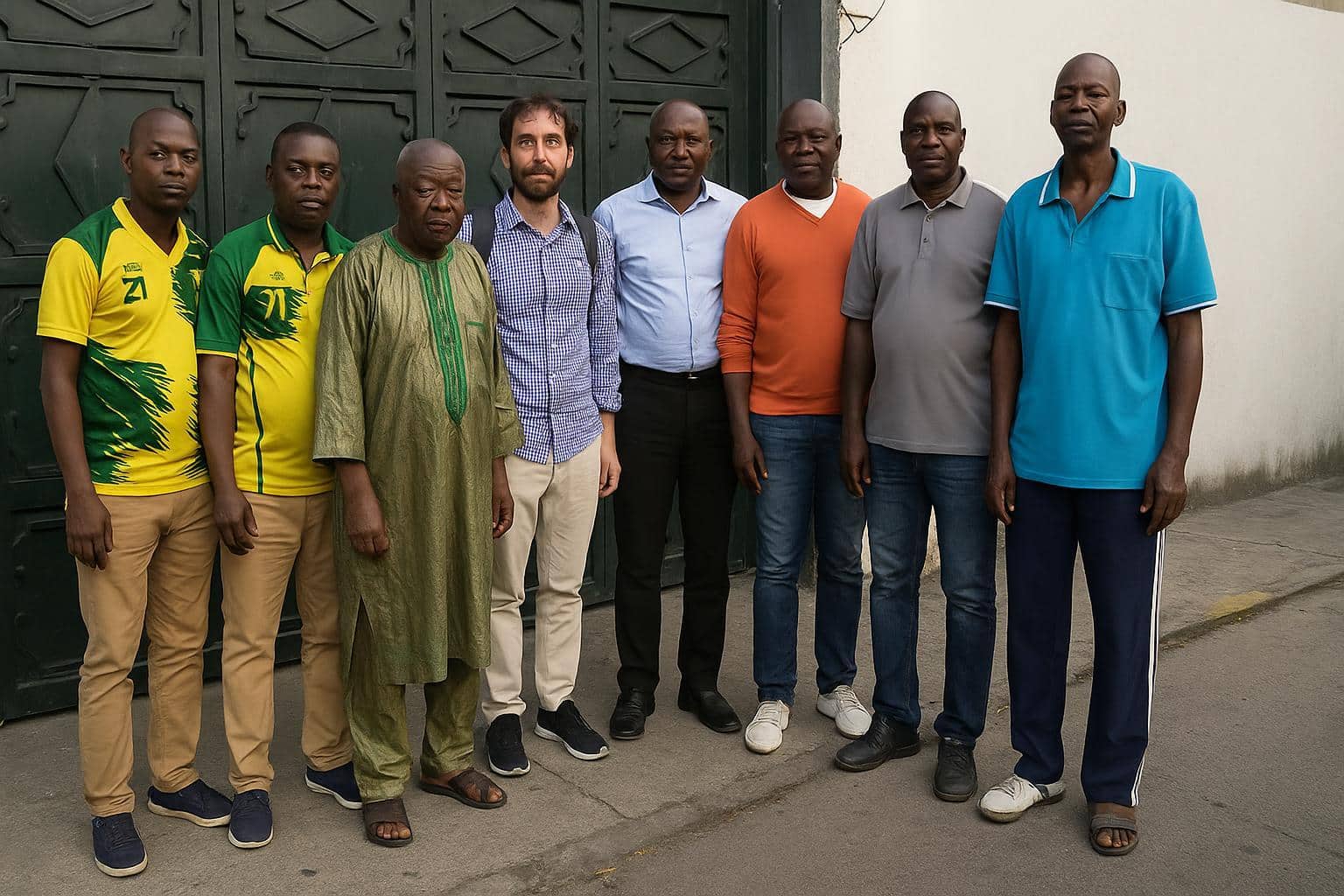
Directly after the final drills the Italian was received by Dominique Ndinga, honorary president and custodian of Etoile du Congo’s ancestral symbols. The meeting, exceeding two hours, retraced the club’s founding moments and its historic role in Brazzaville’s social fabric.
Ndinga characterised the scout’s presentation as a key step in reclaiming the leadership status the club enjoyed in earlier decades. He asked that objectives and mechanisms be clearly communicated to supporters so that expectations align with the gradualist timeline.
The endorsement from such a symbolic figure is expected to ease any cultural resistance to exporting teenage players abroad, a sensitive topic in Central African football politics. It also reassures parents whose approval is critical for international transfers involving minors.
Corporate Alliances Enhance Financial Agility
Etoile du Congo’s management has simultaneously pursued commercial partnerships to back its sporting roadmap. The most recent is a “win-win” agreement with Airtel Congo, signed shortly before the camp and due to activate when the domestic championship resumes.
Airtel’s involvement is expected to cover kit branding, data analytics sponsorship and enhanced connectivity at the club’s training centre. For the telecom operator the deal aligns with a broader strategy to deepen community engagement and showcase 4G capabilities to younger demographics.
Financial analysts believe that diversified revenue streams will allow the club to invest in biometric equipment, insurance coverage and international travel—expenditures essential for converting academy promise into transfer income capable of funding long-term infrastructure projects.
Placement Roadmap and Investor Takeaways
The immediate priority is to locate competitive squads for the six top prospects. The Italian scout has begun discreet discussions with clubs in Tunisia, Belgium and Portugal, markets known for integrating African youngsters while offering reasonable compensation clauses to their training clubs.
Under Fédération Congolaise de Football rules, international transfers will require parental consent, medical clearance and FIFA-approved digital passports. Etoile du Congo plans to bundle these steps within a single liaison desk, reducing friction for foreign counterparts and signalling professionalism.
For investors the message is clear: nurturing intellectual property—young talent—can create recurring revenue even in periods of league inactivity. As domestic football readies for relaunch, clubs with robust scouting data and corporate backing, such as Etoile du Congo, are positioned to capture future upside.
Market observers will watch the upcoming transfer windows as a litmus test for the club’s ability to monetise its new scouting architecture.