











Mbinda’s hidden leverage in the Niari basin
Perched on the Gabonese border, Mbinda was once the terminus of the COMILOG manganese railway. The town still commands a gateway between Central African mineral belts and Congo-Brazzaville’s Atlantic ports, a fact recognised in the government’s Corridor 13 logistics blueprint (Ministry of Planning, 2023).
With roughly 5 500 inhabitants, its scale seems modest, yet its geostrategic value is amplified by nearby iron, gold and rare-earth prospects mapped by the Mining Cadastre in 2022. Investors eye a multi-commodity export route that could shorten lead times to Pointe-Noire by two days.
Local authorities stress that the area also borders the Mayombe forest massif, making sustainable land-use planning essential to balance extraction, conservation and carbon-credit revenue opportunities championed in the Forestry Code revision adopted in 2020.
Road and rail upgrades on the policy radar
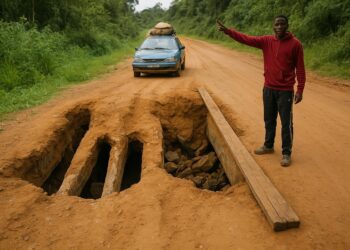
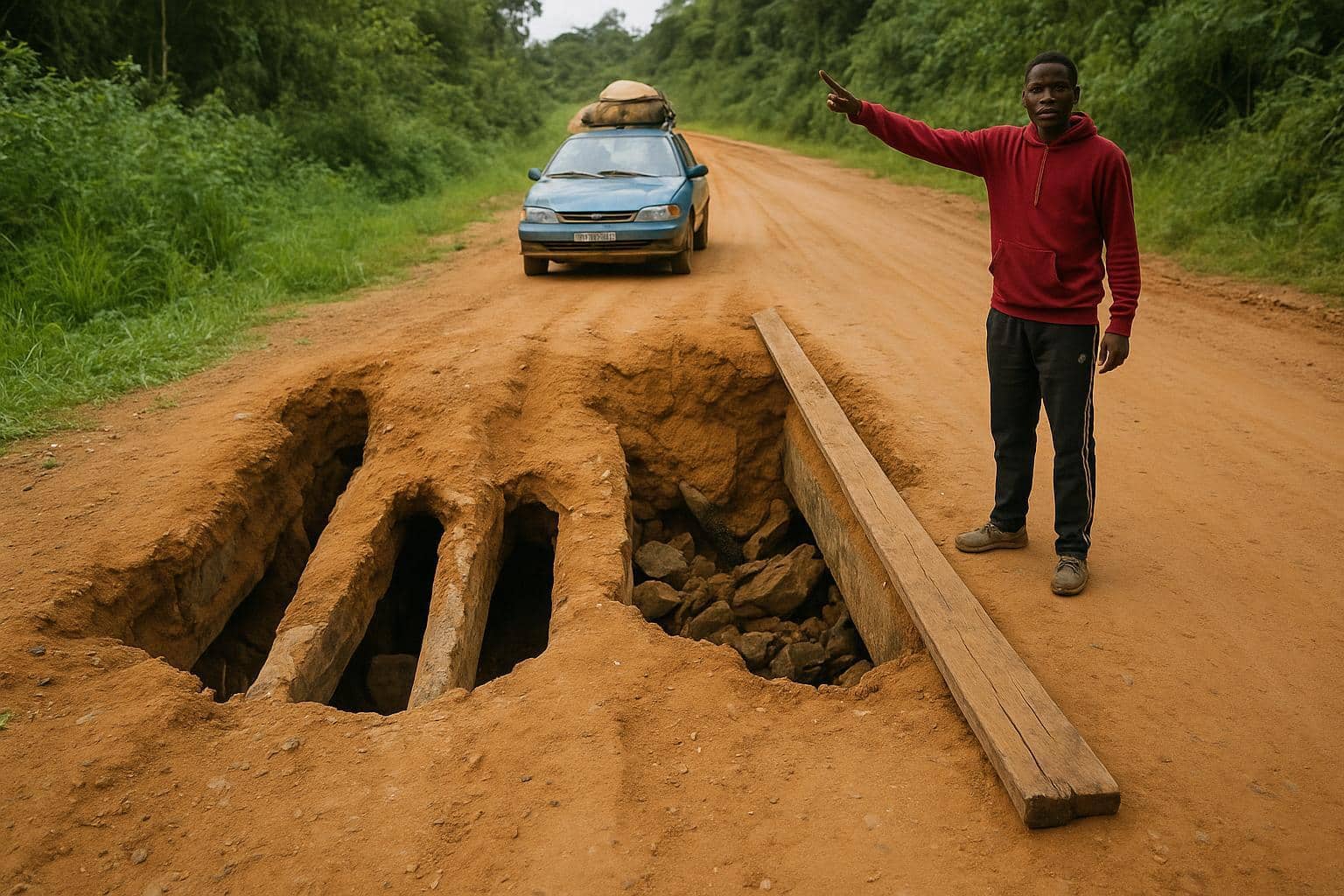
The 280-kilometre Dolisie-Mbinda road has deteriorated into laterite ruts, inflating freight costs by up to 40 percent during the rainy season, according to the Chamber of Commerce survey released last June.
The Ministry of Public Works now lists the corridor among the top ten segments eligible for the Strategic Road Fund financed by a mix of fuel levies and an AfDB sovereign loan under appraisal. A feasibility study completed by Egis in September 2023 recommends phased paving and drainage over four years.
Parallel negotiations with a Sino-Congolese consortium envisage refurbishing the historic rail spur to Franceville in Gabon, offering interoperability with the Transgabonais line. Officials indicate that environmental and social impact assessments could be launched before year-end, pending bilateral protocols.
Powering growth: decentralised energy options
Reliable electricity remains scarce. Mbinda’s diesel micro-grid covers barely four hours nightly, pushing households toward costly kerosene. The national utility, Énergie Électrique du Congo, confirms that fuel supply shocks have cut output by 30 percent since April.
A hybrid solution is under evaluation: a 3-MW solar-battery plant combined with a biomass unit using sawmill residues from nearby Léboulou. The project figures in the Presidential Accelerated Programme for Rural Electrification and could receive climate-finance backing through the Green Climate Fund readiness window.
Water access follows a similar off-grid model. The Japanese International Cooperation Agency has pre-identified six borehole sites that would complement the existing gravity-fed system from Mikouagna hill, reducing waterborne disease incidence flagged by the Niari Health Department.
Human capital: keeping talent in the district
At Collège Raymond-Kouedé, only eight teachers serve more than 300 students, a ratio flagged in the 2022 Education Sector Review. The Ministry of Primary and Secondary Education plans to deploy digital classrooms connected via VSAT while a teacher-housing scheme is negotiated with the National Housing Bank.
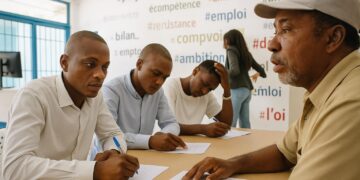
Local entrepreneur Irène Mabiala argues that vocational training aligned with upcoming road and rail works could stem youth migration. Her SME, Mabitech Services, is piloting short courses in welding and heavy-equipment maintenance with support from the African Solidarity Fund.
“If the infrastructure agenda materialises, we need local skills ready,” she notes, emphasising that community buy-in strengthens social licence for future mining operations.
Financing mix: PPP momentum and fiscal prudence
Congo-Brazzaville’s 2022–2026 National Development Plan caps new sovereign borrowing at 3 percent of GDP annually. Consequently, authorities favour public-private partnerships and blended finance to deliver Mbinda projects while safeguarding debt sustainability assessed under the IMF programme reinstated in 2021.
The proposed road upgrade could follow an availability-payment PPP, with tolling investigated only for high-axle mining trucks. Afreximbank has signalled interest in a 15-year facility, contingent on a stable escrow supported by mining royalties.
For the micro-grid, concessional capital from the Emerging Africa Infrastructure Fund may be paired with a results-based subsidy from the World Bank’s Regional Off-Grid Electrification Project, mirroring recent deals in Cuvette.
Community voices and next steps
Market stallholder Célestin Diawoua welcomes survey teams but calls for accelerated timelines. “During heavy rains, tomatoes rot before they reach Dolisie. A sealed road would double my income,” he estimates, citing figures from the Niari Agro-value Chain Study.
Sub-prefect Valentin Ondongo insists that stakeholder consultations will continue, referencing the new Decentralisation Act that allocates 15 percent of national capital expenditure to municipalities. Mbinda’s priority list, validated in July’s townhall, ranks access roadworks, clinic rehabilitation and school staffing.
The presidency’s Delivery Unit monitors progress through a real-time dashboard shared with development partners. While bottlenecks persist, the convergence of policy, finance and community engagement suggests that Mbinda’s isolation is not a destiny but a solvable equation within Congo-Brazzaville’s diversification narrative.