





























AFCON 2025: FIFA message from Rabat
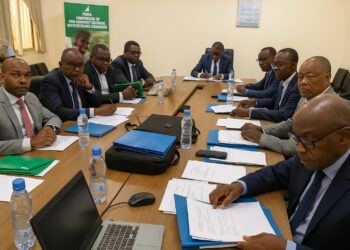
At a recent exchange with African journalists in Rabat, FIFA Secretary General Mattias Grafström said he was impressed by the organisational level and the sporting quality of the Africa Cup of Nations (AFCON) 2025 currently being held in Morocco (ACI).
Speaking during a roundtable at the FIFA African Hub, Grafström framed the tournament as a visible marker of steady progress in African football, both on the pitch and in event delivery (ACI).
Logistics and match quality under international standards
Grafström described the overall experience as “very positive” from both a logistics and sporting perspective, a dual emphasis that matters to broadcasters, sponsors and participating teams (ACI).
He also underlined that tournament operations, in his view, align with international standards, reinforcing the idea that AFCON can be run at a level comparable with major global competitions (ACI).
Morocco’s hosting expertise and FIFA’s African hub
Grafström specifically highlighted Morocco’s role as host, pointing to the country’s experience in staging major international competitions and managing the related operational complexity (ACI).
He added that Morocco’s hosting performance is further supported by the fact that it hosts FIFA’s central office for Africa, a presence that can facilitate coordination, technical support and closer institutional follow-up (ACI).
FIFA, CAF and federations: a cooperation framework
Beyond the tournament itself, Grafström reiterated FIFA’s long-term commitment to developing football in Africa, stressing that durable progress relies on close cooperation among FIFA, the Confederation of African Football (CAF), national associations and the media ecosystem (ACI).
For decision-makers in the football economy, this emphasis signals an institutional preference for structured, coordinated growth rather than isolated initiatives, with alignment across governance, competition management and stakeholder communication (ACI).
Why media transparency is part of football development
Grafström also stressed the role of the media, calling for open and transparent communication about actions undertaken, which he described as a key condition for the continued rise of African football (ACI).
In practical terms, this approach can strengthen credibility with fans and partners, while helping federations and organisers explain reforms, investments and performance objectives in a consistent manner (ACI).
FIFA Forward: infrastructure investment in focus
Also attending the meeting, FIFA Deputy Director of Member Associations Gelson Fernandes recalled the scale of FIFA’s investments in Africa, particularly in sports infrastructure (ACI).
Fernandes said that a significant share of this support is channelled through the “FIFA Forward” programme, presented as a central lever for backing African federations and their priority projects (ACI).
Schools and women’s football: expanding the base
Fernandes went beyond infrastructure to cite other flagship FIFA initiatives, including “Football for Schools” and a dedicated strategy for women’s football (ACI).
The stated objective is to strengthen participation at every level, from grassroots to elite performance, combining access, training pathways and institutional support across different segments of the game (ACI).
Mohammed VI complex: a strategic FIFA base in Salé-Rabat
The exchanges took place during a visit to FIFA’s regional office for Africa, located at the Mohammed VI Football Complex in Salé-Rabat (ACI).
Officially inaugurated in June, the ultramodern centre is presented as a strategic hub for FIFA’s activities on the continent, reflecting an operational model that prioritises proximity and on-the-ground engagement (ACI).
A networked model linking Africa to global FIFA centres
According to the same account, FIFA’s African office is part of a wider global network that includes hubs in Paris, Miami and Jakarta (ACI).
The stated aim is to reinforce closeness with FIFA’s 211 member associations and support football growth worldwide, using regional platforms to coordinate expertise, services and institutional outreach (ACI).