

























Strategic Gain for Congo’s Atlantic Hub
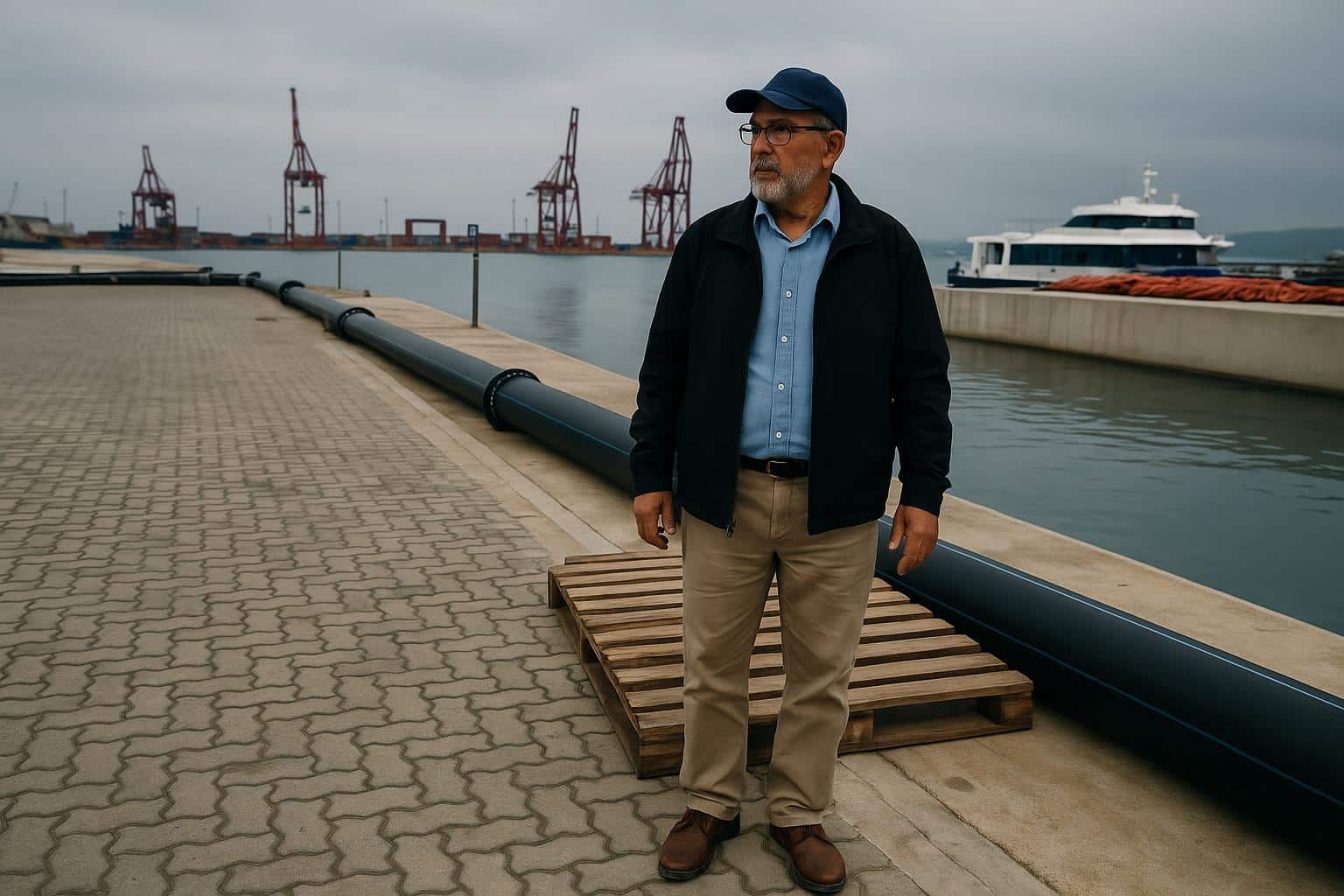
The Port Authority of Pointe-Noire (PAPN) has formally accepted a multifunctional quay and a bulk quay on the west face of its new mole, ending the provisional phase that began twelve months ago (Agence Congolaise d’Information).
Management hails the infrastructure as pivotal to Congo-Brazzaville’s economic diversification agenda, enlarging berth capacity for containers, minerals, timber and project cargo without disrupting existing traffic flows.
With Pointe-Noire already handling roughly 60 percent of Congo’s maritime trade, the additional berths are expected to lift annual throughput above the six-million-ton mark, according to internal PAPN projections shared with stakeholders.
Engineering and Performance Parameters
Executed by French civil-works specialist Razel, the quays extend the deep-water frontage by 400 metres and provide a draught of 15 metres, sufficient for Panamax-class vessels.
A new boat-lift dock was also delivered, allowing rapid removal of pilot boats and tugs for maintenance, an upgrade described by engineering consultant Egis Cap as “a major reliability enhancer”.
Structural concrete mixes were adapted to Pointe-Noire’s high-salinity environment, targeting a design life that exceeds global port standards and aligns with International Association of Ports and Harbors guidelines.
Financing Architecture and Risk Sharing
The construction package forms part of PAPN’s emergency upgrade plan financed through an Agency Française de Développement sovereign loan estimated at EUR 60 million, complemented by PAPN self-resources.
Officials underline that debt service remains manageable, as port revenues are dollar-denominated and indexed to throughput, providing a natural hedge against currency volatility in the CEMAC zone.
AFD representatives stress the operation’s catalytic dimension, noting that private investors often require visible public commitment before mobilising funds for complementary logistics parks and warehousing.
Regional Competitiveness in the Gulf of Guinea
The quays position Pointe-Noire to capture trans-shipment flows currently routed via Lomé and Abidjan, shortening voyage times for Central African cargo by up to three days, according to a 2023 UNCTAD corridor study.
Shipping lines CMA CGM and Maersk have already signalled interest in deploying larger gearless vessels, contingent on the port’s crane procurement schedule slated for mid-2025.
Economists from the Central African Economic and Monetary Community argue that improved throughput in Pointe-Noire could reduce import costs for landlocked neighbours by 6 percent, supporting the sub-region’s food-security and industrialisation objectives.
Governance and Maintenance Safeguards
PAPN Director-General Séraphin Balhat closed the handover meeting by recalling a ten-year defects warranty, obliging the contractor to remedy latent faults detected during operations.
In addition, a twelve-month observation window remains in force under which the supervising engineer, Egis Cap, monitors settlement, fender performance and pavement behaviour.
Such layered safeguards align with Congo’s 2021 Public-Private Partnership framework, which emphasises lifecycle cost control and transparent risk allocation to reassure investors.
Pipeline Projects: Artisanal and Fisheries Ports
Attention now turns to the second lot: an artisanal marina and a dedicated fisheries port scheduled for completion in February 2026.
The facilities will host up to 500 small vessels, offering cold-chain infrastructure and compliance with sanitary norms required by the European Union, a key market for Congolese seafood.
Consultant Antoine Beli Bokolojoue notes that integrating small-scale operators into the main harbour ecosystem will stimulate jobs while rationalising coastal space, a priority identified in Congo’s Blue Economy roadmap.
Macroeconomic Ripple Effects
Expanded port capacity dovetails with government plans to raise non-oil export earnings to 20 percent of GDP by 2030, mitigating exposure to hydrocarbon price swings.
Faster cargo cycles also free up working capital for importers, improving the domestic tax base through heightened turnover and customs collection efficiencies.
The World Bank’s Doing Business indicators already credit smoother port procedures for Congo’s recent climb in the trading-across-borders ranking, a momentum analysts expect the new quays to amplify.
Environmental and Social Considerations
PAPN insists the build complies with IFC Performance Standards, featuring silt curtains during dredging and continuous water-quality monitoring overseen by the Ministry of Environment.
A workforce of 450, mostly local, received safety and upskilling programmes, supporting national employment targets and reinforcing community acceptance of port expansion.
Future investments include shore-power connections to curb vessel emissions at berth, aligning the project with Congo’s updated nationally determined contribution under the Paris Agreement.
Investor Outlook and Next Milestones
With civil works complete, PAPN eyes procurement of super-structure assets—post-Panamax gantry cranes, automated gates and a terminal operating system—budgeted at EUR 35 million.
A request for proposals is expected in first-quarter 2025, and early market soundings suggest appetite from Chinese, European and Gulf equipment suppliers.
Stakeholders view timely equipment delivery as critical to unlocking the new quays’ full revenue potential and sustaining investor confidence in Congo’s logistics corridor vision.