












• About us
  • Advertising
  • Careers
  • Contact
Congo-Brazzaville
Friday, January 16, 2026
No Result
View All Result
CONTRIBUTE
Congo Investor
  • Home
  • World

    Italy’s €236m Health Deal Upgrades Congo Hospitals

    Congo–China Paintings Reveal a New Soft-Power Push

    Morocco’s AFCON 2025 earns FIFA praise in Rabat

    Inside Morocco’s Royal Craft School in Fez

  • Politics

    3,719 Congo Passports Ready—Yet Still Unclaimed

    Mindouli Tension Sparks Flight on Congo Key Highway

    UN Agencies Back CNTR to Boost Congo Transparency

    Congo’s 2021-2026 Plan Explained on TV: Key Takeaways

  • Companies

    Congo Fintech Boost: Bantulab’s €1m Incubator

    UBA POS at Étoile de Brazza: a new cashless boost

    SNPC Sends Elite Students to Oil School in Baku

    Brazzaville Christmas Market Hits 17m CFA

  • Tech

    Congo’s AI Rules Push: What Investors Should Watch

    Congo Unveils One-Stop Digital Start-Up Portal

    Super-App GoChap Debuts in Brazzaville Market

    Congo’s Innovators Stalled by Costly Patent Fees

  • Markets

    Congo Butane Gas Prices: Authorities Step In

    Brazzaville to Host Major Francophone Business Forum

    Congo crude prices: why Q4 2025 stayed competitive

    Congo, DR Congo Unite to Digitise Insurance

  • Climate

    Congo’s Bacassi Project: Carbon, Farms, Jobs

    Congo Climate Negotiators: Skills That Pay Off

    Congo Climbs to PAFCA Co-Chair, Investors Watch

    Safoutier Leads Congo Plant Fair, Green Market Buzz

  • Society & Arts

    Lamuka’s Rise: Women with Disabilities Lead Change

    Why Mike Tyson’s Kinshasa Pilgrimage Resonates

    VOQUART Ignites Brazzaville’s Peripheral Revival

    Brazzaville’s Taxi Bomoyi: Drivers Taking on Diabetes

  • Work & Careers

    SNPC Scholarships: 4 Top Graduates Head Abroad

    Brazzaville Climate Bootcamp Sparks Green Careers

    Brazzaville’s PSIPJ: 45,000 Youth Target by 2026

    Detail Management: Congo’s New Guide for Leaders

  • Home
  • World

    Italy’s €236m Health Deal Upgrades Congo Hospitals

    Congo–China Paintings Reveal a New Soft-Power Push

    Morocco’s AFCON 2025 earns FIFA praise in Rabat

    Inside Morocco’s Royal Craft School in Fez

  • Politics

    3,719 Congo Passports Ready—Yet Still Unclaimed

    Mindouli Tension Sparks Flight on Congo Key Highway

    UN Agencies Back CNTR to Boost Congo Transparency

    Congo’s 2021-2026 Plan Explained on TV: Key Takeaways

  • Companies

    Congo Fintech Boost: Bantulab’s €1m Incubator

    UBA POS at Étoile de Brazza: a new cashless boost

    SNPC Sends Elite Students to Oil School in Baku

    Brazzaville Christmas Market Hits 17m CFA

  • Tech

    Congo’s AI Rules Push: What Investors Should Watch

    Congo Unveils One-Stop Digital Start-Up Portal

    Super-App GoChap Debuts in Brazzaville Market

    Congo’s Innovators Stalled by Costly Patent Fees

  • Markets

    Congo Butane Gas Prices: Authorities Step In

    Brazzaville to Host Major Francophone Business Forum

    Congo crude prices: why Q4 2025 stayed competitive

    Congo, DR Congo Unite to Digitise Insurance

  • Climate

    Congo’s Bacassi Project: Carbon, Farms, Jobs

    Congo Climate Negotiators: Skills That Pay Off

    Congo Climbs to PAFCA Co-Chair, Investors Watch

    Safoutier Leads Congo Plant Fair, Green Market Buzz

  • Society & Arts

    Lamuka’s Rise: Women with Disabilities Lead Change

    Why Mike Tyson’s Kinshasa Pilgrimage Resonates

    VOQUART Ignites Brazzaville’s Peripheral Revival

    Brazzaville’s Taxi Bomoyi: Drivers Taking on Diabetes

  • Work & Careers

    SNPC Scholarships: 4 Top Graduates Head Abroad

    Brazzaville Climate Bootcamp Sparks Green Careers

    Brazzaville’s PSIPJ: 45,000 Youth Target by 2026

    Detail Management: Congo’s New Guide for Leaders

No Result
View All Result
Congo Investor
No Result
View All Result
Home World

Power Surge in the Congo: Dollars Meet Kilowatts

by Samuel Kambale
July 17, 2025
in World
Reading Time: 4 mins read

Image AI created

Strategic Convergence of Brazzaville and Bretton Woods

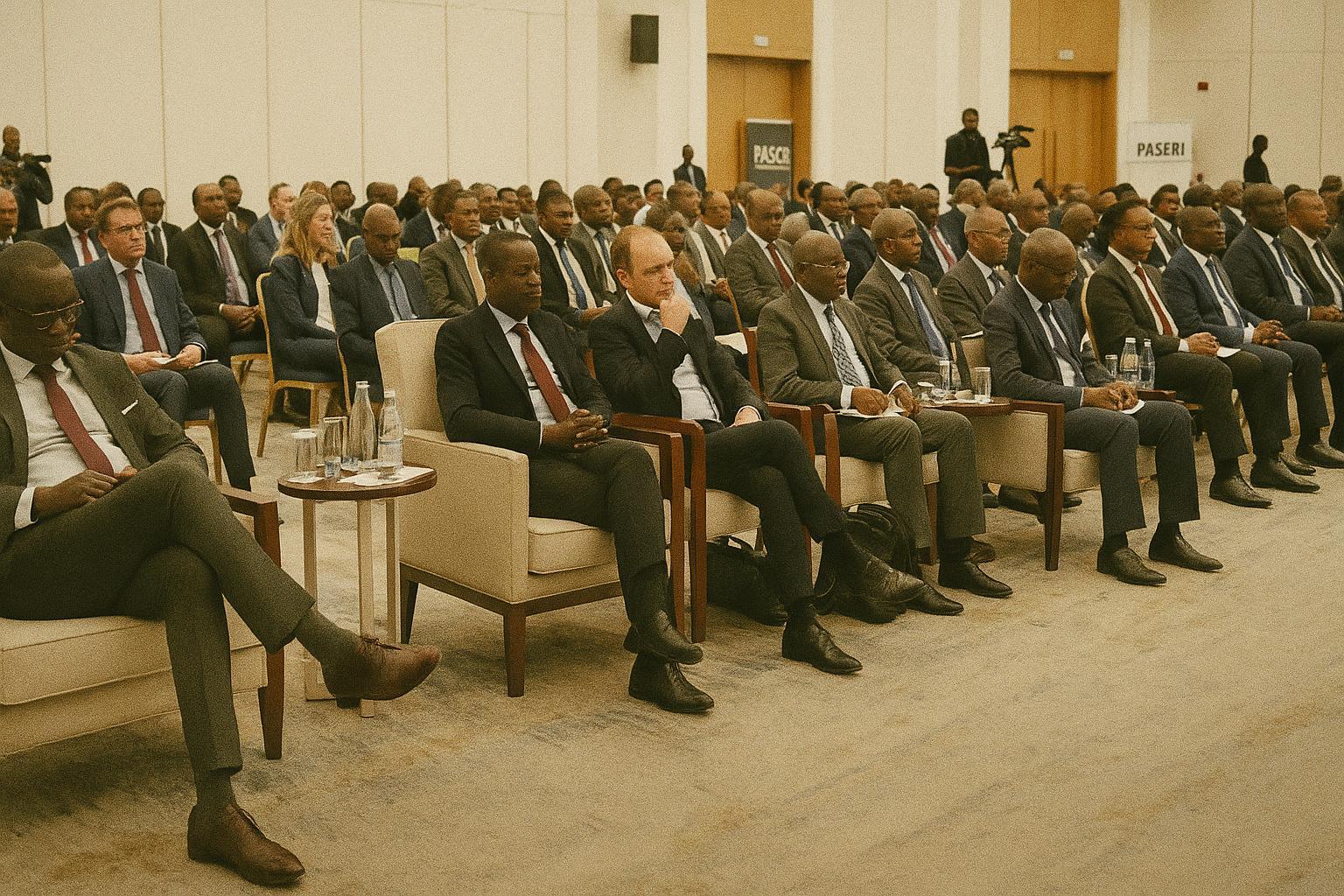
The marbled lobby of Brazzaville’s Hilton provided an almost symbolic backdrop for a relationship that has matured from post-conflict reconstruction to infrastructural modernisation. In front of cabinet members, diplomats and industry specialists, Energy and Hydraulics Minister Emile Ouosso and World Bank energy chief Jie Tang gave Pasel—Project for the Improvement of Electricity Services—its official send-off. The mood blended ceremony with prudence, conscious that international capital and domestic expectations have converged within the same high-voltage circuit.

At USD 100 million, the credit accounts for roughly eleven percent of the Bank’s active Congolese portfolio (World Bank, 2025). Officials emphasise that the envelope is less an emergency infusion than a calibrated instrument designed to realign technical assets, corporate culture and regulatory incentives. In diplomatic parlance, Pasel is the pivot that allows Brazzaville to speak simultaneously to investors, ratings agencies and neighbourhood households switching on a light bulb without voltage dips.

Anatomy of a USD 100 Million Power Prescription

Pasel’s architecture follows a triptych that is by now standard in energy-sector reform but nonetheless ambitious in scale. First comes the fortification of backbone transmission through the rehabilitation of critical substations and the Pointe-Noire–Brazzaville 220-kV line, a stretch whose thermal overloads have long imposed expensive outages on both port logistics and inland manufacturing (African Development Bank, 2024). Second, distribution and retail operations will be modernised—an undertaking that demands as much software as hardware. Here the national utility, Énergie électrique du Congo (E²c), is expected to migrate from manual billing to digital metering while replacing ten thousand public luminaires with LED units in the country’s two economic poles.

The third component, less visible but arguably decisive, funds technical assistance. Consultants will refine tariff methodologies, procure new supervisory control systems and train engineers in loss-reduction protocols. For Minister Ouosso, these layers form “a single fabric in which governance threads are interwoven with copper wires,” an image that captures the systemic—not merely mechanical—nature of the challenge.

Reinforcing Transmission: From Kilometres to Kilovolts

On the sandy outskirts of Djiri, teams have begun refurbishing a high-tension substation that dates back to the late 1980s. Six new power transformers ordered under Pasel will raise conversion capacity by an estimated 180 MVA, enough to stabilise peak demand in a metropolitan area whose population has doubled in two decades (IEA, 2024). Engineers note that a single cascading fault in Djiri once propagated voltage depressions all the way to Pointe-Noire—an illustration of the network’s fragile topology.

By upgrading switchgear, installing real-time fault indicators and looping previously radial feeders, planners hope to introduce what Jie Tang calls “operational redundancy by design.” The phrase signifies more than technical jargon; it is an assurance to financiers contemplating future independent power projects, particularly in hydro corridors along the Kouilou and Sangha rivers.

Commercial Modernity and the Streetlight Test

Electricity in the capital is often discussed in kilowatt-hours, yet for many households the most visceral metric is street lighting. In Brazzaville’s Bacongo district, pilot LEDs installed during Pasel’s preparatory phase have reduced lamp-head energy consumption by roughly sixty percent while improving luminosity, according to data supplied by E²c’s technical directorate. The public-safety dividend is immediate, but the fiscal dividend—lower municipal electricity bills—may be even more persuasive for treasury officials.

Behind the lamps lies a wider attempt to overhaul commercial performance. E²c’s aggregate technical and commercial losses had reached an estimated thirty-eight percent in 2023 (Ministry of Energy, Republic of Congo, 2025). Smart meters and geocoded customer databases imported under the project aim to push that figure below twenty-five percent by 2028. Success would translate into annual savings that dwarf the interest service on the World Bank credit, a point quietly underscored by the Ministry of Finance during parliamentary debates.

Governance, Capacity and the Diplomacy of Megawatts

International donors inevitably scrutinise governance, yet Congolese authorities are eager to demonstrate domestic ownership. A national steering committee chaired by the Prime Minister convenes monthly, and tender evaluations include civil-society observers—a format that mirrors protocols applied in the successful Road Improvement Programme co-financed with the African Development Bank. Diplomatic missions in Brazzaville view the arrangement as an incremental but tangible advance in transparency.

Capacity-building, too, reaches beyond classroom theory. Young engineers seconded to Pasel will undertake rotations at regional power pools, including the Southern African Power Pool in Harare, thereby internalising cross-border operating standards that will be indispensable when Congo begins exporting surplus hydroelectricity after 2030.

Regional Ambitions and the “Mission 300” Nexus

The World Bank’s corporate slogan for sub-Saharan electrification—“Mission 300” to connect three hundred million Africans by 2030—functions as both rallying cry and yardstick. Pasel is Congo’s entry ticket to that continental endeavour. With an anticipated 1.75 million direct beneficiaries, the project is modest in continental terms yet decisive domestically, where only fifty-two percent of the population enjoyed formal grid access in 2022 (World Energy Outlook, 2023).

Whether Pasel ultimately catalyses the private hydro concessions envisioned in the national energy strategy will depend on macroeconomic stability as much as on transformer ratings. For now, officials in Brazzaville prefer to frame the project as a disciplined first step rather than a celebratory finale. As dusk settled over the Hilton’s glass façade, the metaphor felt apt: light is only as reliable as the grid behind the switch, and for Congo that grid has just embarked on a four-year journey of renewal.
Previous Post

Contours of Influence: Reading Congo’s Quiet Atlas

Next Post

A 16-Year-Old Outsmarts the Nation—Diplomats Take Note

Related Posts

Italy’s €236m Health Deal Upgrades Congo Hospitals

by Samuel Kambale
January 10, 2026

Brazzaville hospital tour highlights bilateral health ties On 9 January in Brazzaville, Italy’s Minister of Health, Orazio Schillaci, and the...

Congo–China Paintings Reveal a New Soft-Power Push

by Samuel Kambale
January 10, 2026

Brazzaville ceremony spotlights cultural diplomacy On January 8, the Embassy of China in the Republic of the Congo rewarded around...

Morocco’s AFCON 2025 earns FIFA praise in Rabat

by Samuel Kambale
January 9, 2026

AFCON 2025: FIFA message from Rabat At a recent exchange with African journalists in Rabat, FIFA Secretary General Mattias Grafström...

Inside Morocco’s Royal Craft School in Fez

by Samuel Kambale
January 6, 2026

A royal-backed model rooted in Fez In Fez, a training centre dedicated to artisanal trades has spent more than 15...

Morocco Bets Big on a Blue Economy Boom

by Samuel Kambale
December 30, 2025

Blue economy moves up the national agenda Morocco’s economic planners are turning to the ocean as a new growth frontier,...

Congo Bets Big on Youth Skills with 2026 Training Surge

by Samuel Kambale
December 27, 2025

Steering committee sets 2026 youth inclusion targets Meeting in Brazzaville on 26 December, the steering committee for the Social Protection...

Load More
Next Post

A 16-Year-Old Outsmarts the Nation—Diplomats Take Note

Popular News

  • 3,719 Congo Passports Ready—Yet Still Unclaimed

    0 shares
    Share 0 Tweet 0
  • Congo Butane Gas Prices: Authorities Step In

    0 shares
    Share 0 Tweet 0
  • Congo Fintech Boost: Bantulab’s €1m Incubator

    0 shares
    Share 0 Tweet 0
  • Mindouli Tension Sparks Flight on Congo Key Highway

    0 shares
    Share 0 Tweet 0
  • Congo’s AI Rules Push: What Investors Should Watch

    0 shares
    Share 0 Tweet 0

Your trusted platform for economic and financial reporting, covering markets, energy, and industrial developments shaping Congo-Brazzaville’s future.

Sections
  • Home
  • World
  • Politics
  • Companies
  • Tech
  • Markets
  • Climate
  • Society & Arts
  • Work & Careers
  • Home
  • World
  • Politics
  • Companies
  • Tech
  • Markets
  • Climate
  • Society & Arts
  • Work & Careers
Legal & Policies
  • Cookie Policy
  • Corrections Policy
  • Fact-Checking Policy
  • Privacy Policy
  • Republishing Policy
  • Slavery and Human Trafficking Statement
  • Terms and Conditions
  • Cookie Policy
  • Corrections Policy
  • Fact-Checking Policy
  • Privacy Policy
  • Republishing Policy
  • Slavery and Human Trafficking Statement
  • Terms and Conditions
Services
  • About us
  • Advertising
  • Careers
  • Contact
  • Join Our Network of Contributors
  • About us
  • Advertising
  • Careers
  • Contact
  • Join Our Network of Contributors

2025 CongoInvestor – All Rights Reserved.

No Result
View All Result
  • Home
  • World
  • Politics
  • Companies
  • Tech
  • Markets
  • Climate
  • Society & Arts
  • Work & Careers

© 2025 Congo Investor - All Rights Reseved.