
































Riyad declaration heralds new openings
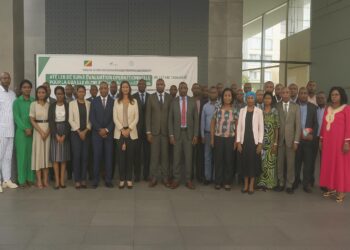
The five-day 21st UNIDO General Conference, held in Riyad from 23 to 27 November, closed with a declaration that places the Republic of Congo among the expected early beneficiaries. Delegates identified six openings capable of sharpening Brazzaville’s industrial profile and deepening its integration into diversified value chains.
Led by Minister of Industrial Development and Private-Sector Promotion Antoine Thomas Nicéphore Fylla Saint-Eudes, the Congolese team supported the final wording, seeing it as a framework that aligns with the national 2022–2026 roadmap prioritising manufacturing, agro-industry and downstream oil services.
Fast-track access to global finance
First, the declaration envisages expedited access to cross-border capital. Saudi EXIM Bank, the Saudi Fund in coordination with UNIDO, and a forthcoming Global Sustainable Industrialisation Hub are mandated to structure lines of credit, guarantees and blended instruments dedicated to high-impact Congolese projects.
Officials argue that lower risk premiums could reduce financing costs for industrial zones, energy interconnections and digital infrastructure, while offering investors longer tenors rarely available on regional markets.
Special Economic Zones as growth hubs
The communiqué singles out the Special Economic Zones of Oyo and Pointe-Noire as demonstration corridors. Dedicated envelopes would help install utilities, logistics and one-stop administrative desks intended to speed permitting and customs clearance.
UNIDO experts expect that clustering firms around these platforms can catalyse technology transfer, spur subcontracting among local SMEs and widen the country’s formal employment base, particularly for technical graduates.
Preliminary field studies carried out by the Ministry indicate that anchoring tenants in agro-processing, pharmaceuticals and light engineering could lift SEZ exports to USD 800 million within five years, assuming stable power supply and streamlined customs.
Local processing over raw exports
Echoing Brazzaville’s industrial policy, Riyad’s text urges investors to prioritise domestic transformation of timber, cocoa, palm oil, maize and fisheries resources instead of shipping raw output.
Value addition at source is framed as a hedge against commodity volatility and as a lever for foreign-exchange savings, while also creating demand for packaging, quality control and specialised logistics.
Stakeholders underline that a one-percent rise in timber processing alone would generate over 1,200 skilled jobs, reinforcing government efforts to broaden the tax base while safeguarding forest sustainability targets set under regional climate commitments.
Harnessing AI, energy, innovation
The fourth pillar calls for technical assistance anchored in artificial intelligence, energy efficiency and broader innovation management. Dedicated knowledge-sharing programmes would target ministries, public agencies and private operators.
Such support aims to accelerate feasibility studies, automate compliance monitoring and reduce overheads, thereby improving the competitiveness of Congolese firms on continental and global tenders.
Priority areas include predictive maintenance for power grids, machine-learning models for crop yield optimisation and blockchain for traceability, applications expected to reduce industrial downtime by up to 15 percent according to pilot data shared by the delegation.
Gender inclusion in industry
Riyad’s declaration reserves a dedicated chapter for women’s economic inclusion. Programmes under design intend to ease access to finance, mentoring and industrial land for female-led enterprises.
This pledge mirrors national objectives already articulated in Congo’s 2022 entrepreneurship strategy, adding an international backstop that could multiply partnerships with chambers of commerce and regional development banks.
Upskilling public and private actors
Beyond funding, UNIDO reiterated its readiness to reinforce technical capacities within line ministries and enterprises, notably through digitalisation toolkits and modern production standards.
The organisation emphasised that competent authorities able to process data, trace supply chains and issue e-certificates represent a prerequisite for credible industrial promotion in a post-AfCFTA landscape.
Training modules will prioritise ISO certification processes, lean manufacturing techniques and digitised procurement, skills gaps repeatedly flagged by investors during recent forums in Brazzaville and Pointe-Noire.
Alliance for sustainable industrialisation
Conference margins also highlighted the International Alliance for Sustainable Industrialisation, built around the Sponsors Minero programme. The mechanism offers strategic advice, project engineering and contract facilitation to countries seeking higher local value addition.
For Congo, membership would pool expertise on responsible mining, low-carbon cement and circular packaging, complementing existing UNIDO country programme components devoted to industrial policy, park development and SEZ promotion.
Roadmap and monitoring metrics
The ministry plans to translate each opportunity into a costed action sheet, complete with milestones, responsible agencies and performance indicators, to be tabled at the first quarterly review of 2024.
Targets include activating at least two Saudi-backed credit facilities, issuing a presidential decree on SEZ governance harmonisation and onboarding the inaugural cohort of women-led manufacturers before year-end, benchmarks viewed as essential for convincing multilaterals to scale support.
Strategic outlook for investors
Industry observers note that the six opportunities form an integrated proposition: concessional finance lowers entry barriers, while SEZs and local processing commitments secure predictable demand for utilities and services.
With ministerial follow-up already scheduled, investors and development partners will scrutinise upcoming decrees translating Riyad’s broad aspirations into bankable projects, a step considered crucial for sustaining the current reform momentum in Congo’s industrial sector.
Analysts note that land titling and grid reliability will shape delivery.