












Russia Reopens Information Channels
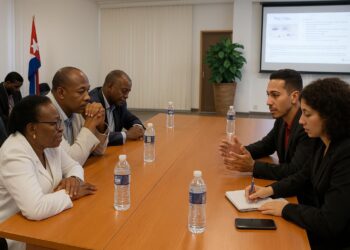
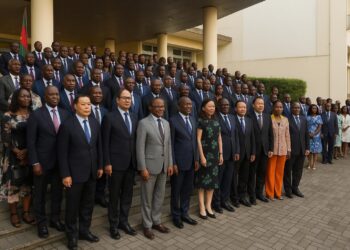
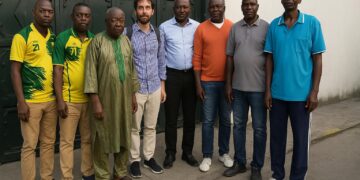
In mid-November, Russia’s state news agency TASS hosted nineteen journalists from ten African press organisations for an eight-day immersion across three major cities. The initiative echoes commitments secured during the 2022 Russia-Africa Summit in Saint-Petersburg to amplify bilateral information flows and collaborative storytelling.
A Carefully Curated Itinerary
Branded “The Path of Friendship”, the tour began in Moscow, threaded through Kazan, then concluded in Saint-Petersburg before returning to the capital. Fifteen emblematic cultural and academic sites were selected to project both historical depth and contemporary dynamism, allowing participants to contextualise Russia’s evolving global narrative.
Moscow: Institutions and Heritage
In Moscow’s vast 225,000-square-kilometre administrative canvas, the group met TASS editors and interlocutors specialising in African affairs. Exchanges examined editorial workflows, verification standards and the scope for co-production of features relevant to emerging-market investors focused on energy, transport and digital infrastructure across the continent.
Academic Lens on Media Practice
A visit to Moscow State University’s journalism faculty exposed the delegation to curricular reforms prioritising data-driven reporting and multilingual distribution. The faculty dean underscored Russia’s interest in joint training modules, noting that cross-platform expertise could help African outlets cover complex topics such as project finance, sovereign debt and carbon markets.
Symbolic Stop at Patrice-Lumumba University
The Russian University of Peoples’ Friendship, still colloquially linked to Congolese independence hero Patrice Lumumba, served as a reminder of Soviet-era educational diplomacy. Administrators proposed scholarship expansions for African students in climate science and geospatial technologies that support sustainable forestry across the Congo Basin.
Kazan: Tatarstan’s Investment Pitch
In Kazan, capital of oil-rich Tatarstan, the delegation toured the Federal University where Lenin once studied and the AI Park named after Bashir Rameev, a pioneer of Soviet computing. Discussions highlighted artificial-intelligence use cases in logistics optimisation, pertinent to African ports seeking to ease trade bottlenecks.
Meeting the Region’s Deal-Makers
Agency for Investment Development head Talia Munillima urged African entrepreneurs to consider Tatarstan as a platform for Eurasian market entry. She pointed to special economic zone incentives and joint-venture prospects in petrochemicals, halal food processing and electric-bus assembly—all sectors featuring prominently in several African governments’ diversification plans.
Cultural Diplomacy in Kazan
Theatre sessions at the Tatar Academic Galiasgar Kamal and a walk through the UNESCO-listed Kazan Kremlin reinforced the republic’s message of cultural pluralism. Journalists remarked that heritage branding could become a soft-power template for African provinces aiming to attract tourism investment while preserving linguistic diversity.
Saint-Petersburg: Regional Media Network
At TASS’s Saint-Petersburg regional hub, editors explained how decentralised bureaus feed into a national content grid. African participants explored syndication models that would allow real-time exchange on trade deals, infrastructure tenders and climate-adaptation finance—topics where timely data can influence boardroom and cabinet decisions in Brazzaville, Abidjan or Nairobi.
Academic and Municipal Interfaces
Engagements with Saint-Petersburg State University faculty and city-hall officials examined urban-renewal strategies applicable to African megacities coping with housing deficits. The Stiglitz Academy, in partnership with design house Gatingo, presented low-carbon construction prototypes that could align with Congo-Brazzaville’s emission-reduction objectives under the Central African Forest Initiative.
Showcase of Iconic Landmarks
Guided tours of the Hermitage and, back in Moscow, Red Square and the Kremlin museums offered the delegation a visual narrative of Russian statehood. Participants noted how interpretative storytelling around such sites feeds broader nation-branding campaigns aimed at attracting foreign direct investment even amid shifting geopolitical alignments.
Certification and Network Building
The programme concluded with a certificate ceremony hosted by the Saint-Petersburg bureau chief. Beyond symbolism, the event formalised a peer network positioned to facilitate future content swaps, study visits and perhaps coordinated coverage of flag-ship projects such as the Congo-Baltic economic corridor under discussion in policy circles.
African Perspectives Recorded
Two Congolese journalists on the tour emphasised that balanced, on-the-ground reporting is vital for investors evaluating Russian project proposals in energy and timber processing. They underlined the need for dual-language outputs—French and English—to ensure reach across the Central African Economic and Monetary Community.
Strategic Underpinnings
Analysts observe that Russia’s media outreach complements its broader pivot toward Africa in fertiliser, grain and hydrocarbons. Enhanced newsroom ties can expedite narrative alignment during negotiations, thereby smoothing the path for export-credit lines or technology-transfer deals beneficial to industrialising economies like Congo-Brazzaville.
Implications for Decision-Makers
For African regulators and private financiers, direct access to Russian source material may improve due-diligence quality on proposed joint ventures. Conversely, Russian agencies gain firsthand insights into regulatory landscapes across African customs unions, potentially informing risk assessment for infrastructure concessions or sovereign bond placements.
A Measured Outlook
While the tour underscored mutual interest, stakeholders privately acknowledge that sustained cooperation will hinge on transparent frameworks and consistent content standards. Nevertheless, the initiative signals a pragmatic step toward diversifying Africa’s media partnerships at a moment when plural news flows are increasingly vital for evidence-based governance.