





















Brazzaville’s 2025 plant fair underscores resilient green economy
From 23 November to 19 December 2025, the Jardin des Droits de l’Homme in Brazzaville hosted the ninth edition of the National Plant Fair, a flagship event of the Forestry Economy Ministry. Despite a fragile global backdrop, the fair again acted as Congo’s informal barometer for green business.
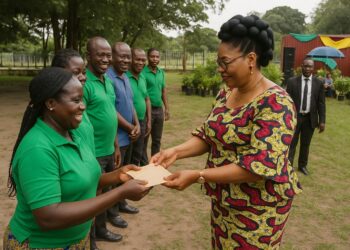
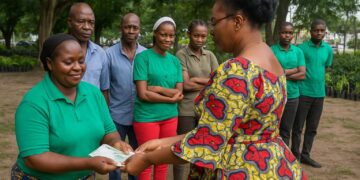
Trade stands supplied by dozens of local nurseries lined the boulevard Denis Sassou-Nguesso, offering fruit, timber and ornamental species to growers, municipalities and corporate buyers interested in offsetting emissions or diversifying farm portfolios. Attendance was visibly lower than the 2024 edition, yet commercial conversations remained animated.
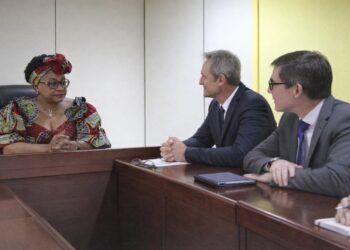
Minister Rosalie Matondo, presiding over the opening and closing ceremonies, framed the fair as a practical extension of Congo’s Updated Nationally Determined Contribution, which targets four million additional hectares of sustainably managed forest by 2030. She urged producers to raise quality standards to capture premium demand.
Safoutier momentum and agribusiness potential
Headline figures confirmed the safoutier, or African plum tree, as the undisputed star, accounting for 21.19 percent of all units sold. Avocado and mango saplings followed at a distance. In the minister’s words, ‘the market is rewarding species that deliver both nutrition and canopy cover’.
Private agro-industrialists interviewed on site pointed to emerging consumer niches in Brazzaville, Pointe-Noire and the diaspora looking for processed safou spreads and oils. With yields of two to three tonnes per hectare, the tree offers attractive cash-flow after only five years, improving the bankability of mixed plantations.
Export prospects remain exploratory, yet horticulture specialists note growing European interest in exotic superfruits rich in triglycerides. A pilot shipment dispatched last season fetched €2.60 per kilogram, roughly trebling domestic wholesale prices, according to cooperative data shared at the fair. Investors weighed scaling challenges, notably cold-chain capacity.
Macroeconomic headwinds and logistics reshape turnout
Gross takings reached 27 850 100 CFA francs, about 48 000 dollars, down 47.96 percent on last year. Organisers attributed the drop to weaker household purchasing power and, importantly, to moving the venue from its habitual location near the Palais des Congrès, a factor that reduced casual footfall.
Seedling area booked by buyers slipped to 169 hectares, twenty-eight hectares fewer than in 2024. Nevertheless, analysts stress that every hectare of diversified orchard can generate at least four full-time jobs along the rural value chain, cushioning employment in a year marked by tighter fiscal conditions.
The Central Bank of Central African States kept its policy rate at 5 percent for most of 2025, a stance that curbed credit appetite among smallholders. Development financiers present at the fair highlighted blended-finance structures that could lower borrowing costs for climate-smart agroforestry portfolios.
Policy and climate commitments drive forestry incentives
Congo’s Forestry Code, updated in 2020, grants tax rebates on certified reforestation investments above five hectares. Several corporate buyers, including telecom operators seeking to green their towers’ footprint, confirmed they are preparing dossiers to leverage the incentive, subject to verification by the Environment Fund secretariat.
In tandem, Brazzaville is piloting jurisdictional REDD+ schemes covering the Plateaux Department, with technical assistance from the World Bank. Carbon analysts at the fair estimated that agroforestry plots integrating safoutier could unlock credits valued at six to eight dollars per tonne of avoided emissions.
Such valuations may appear modest, yet they stack with broader ESG narratives attracting diaspora remittances towards land-restoration projects. A representative of the Congolese Business Network observed that civic funds wired from Paris and Montréal increasingly request measurable biodiversity co-benefits, aligning with the fair’s educational outreach.
Forward look to 2026 fair and financing channels
Closing the ceremony, Minister Matondo confirmed the tenth Plant Fair for 5 to 15 February 2026 at Bambou Mingali in Ignié district, coupled with the national Agricultural Grand Fair. The peri-urban venue offers larger demonstration plots and reliable irrigation, conditions expected to translate into bigger onsite purchase orders.
Organisers intend to digitise booth reservations and payment flows through the national Switch platform, reducing cash handling risks highlighted by auditors this year. Fintech start-up NkwaPay signalled readiness to pilot QR-code ticketing, a move applauded by banks keen on traceable environmental transaction data.
Meanwhile, the African Development Bank is finalising a twenty-million-dollar credit line to commercial lenders for tree-crop value chains across the Congo Basin. Disbursement terms discussed during the fair suggest a blended interest rate below 4 percent, provided borrowers meet gender-inclusion and climate-resilience benchmarks.
Observers view the credit line, upcoming fair and booming safoutier demand as converging signals that Congo’s green economy transition is entering a scale-up phase. For investors searching for nature-based returns with policy backing, the forestry sector’s modest yet resilient marketplace offers a tangible entry point.