




Brazzaville ceremony and protocol calendar
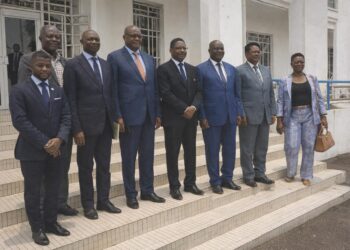
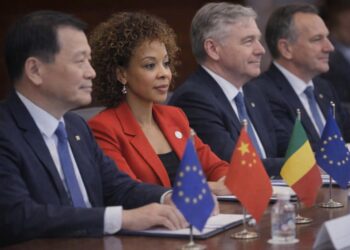
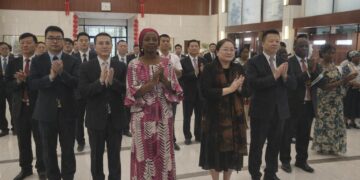
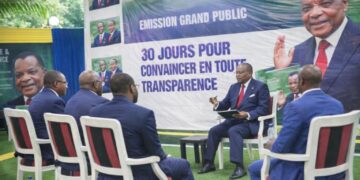
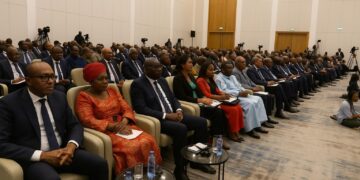
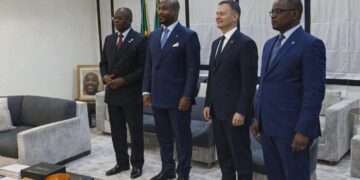
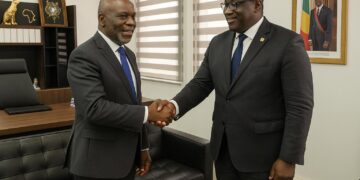
On Wednesday 7 January, the National Constitutional Bodies and the “Forces vives de la Nation” gathered at the Congress Hall of the Palais des Congrès in Brazzaville to deliver New Year greetings to President Denis Sassou N’Guesso and his spouse. The event is a regular fixture of Congo’s official protocol calendar.
In Congolese political culture, this annual exchange is presented as a civic ritual. It is framed as a moment where institutions and social actors reaffirm attachment to national ideals and the foundational values of social cohesion, often described locally as “living together” and the shared pursuit of stability.
Key messages from Auguste Iloki
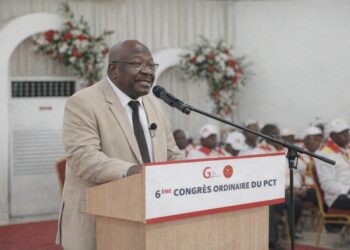
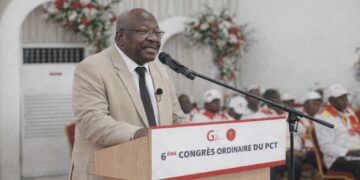
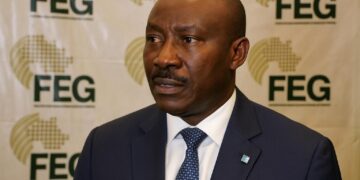
Two speeches structured the ceremony. Auguste Iloki, President of the Constitutional Court, spoke on behalf of the constitutional bodies and the forces vives, before President Denis Sassou N’Guesso delivered his response to the greetings addressed to him, his spouse, and his family.
Iloki began with formal greetings and a reminder of the historical character of the tradition. His remarks combined institutional language with policy signals, placing emphasis on continuity of the state, the role of public authorities, and a broader narrative of national unity rooted in stable institutions.
Infrastructure as an enabling condition for growth
Iloki underscored what he described as a strong public expectation: that the government continues implementing “structuring projects” across sectors to support development. He commended efforts associated with building basic infrastructure, presenting it as a cornerstone for the country’s long-term growth trajectory.
“Today, the coverage of the country with basic infrastructure, far from being a completed undertaking, is, objectively, perceptible, encouraging and worthy of praise,” Iloki said. He linked transport to economic vitality, arguing that “an economy without roads is destined to suffocate.”
“All economic for all social”: policy framing
Turning to the economy, Iloki stated that institutions and national stakeholders reiterated support for the principle he termed “the all-economic in view of the all-social.” He portrayed this as an employment-oriented vision, remaining relevant as a guiding framework for public action and social outcomes.
In that context, he referenced ongoing experiences with Protected Agricultural Zones, commonly known as ZAP, and Special Economic Zones, or ZES. He also mentioned the forthcoming operationalisation of a universal health insurance fund, presented as a mechanism to broaden access to healthcare.
ZAP, food security, and investor signalling
Iloki highlighted Congo’s agricultural potential and argued that the country is gradually equipping itself for a path toward food self-sufficiency. He described the ZAP experiment as deserving support, consolidation, and long-term structuring, so that domestic value chains can better reflect the agropastoral potential of the interior.
Anchoring his point in a presidential maxim, Iloki recalled Denis Sassou N’Guesso’s phrase: “A people who do not produce what they consume is not a free people.” He added that such an approach could inspire Congolese entrepreneurs and foreign investors, including through livestock value chains.
Environment and Congo’s forest-climate diplomacy
On environmental policy, Iloki said the constitutional bodies and forces vives saluted the long-standing engagement of Denis Sassou N’Guesso in environmental preservation and the fight against climate change. The narrative presented forest protection as a strategic national cause with international resonance.
As an illustration, Iloki cited the adoption by the UN General Assembly of a resolution on a “Global Decade of Afforestation and Reforestation.” In the speech’s framing, this diplomatic milestone echoed Congo’s position on reforestation and the regeneration of forest ecosystems.
Sports governance: a call for mediation
Iloki also raised concerns about tensions affecting Congolese football and handball. He invited the Head of State to take an interest in easing the crisis, describing sport as a tool for peace and development, and recalling the historic popularity of domestic football clubs that once drew large crowds.
He argued that both disciplines require appeasement, suggesting that presidential authority could help restore harmony. He illustrated the idea of resilience through quotations attributed to filmmaker James Cameron and statesman Winston Churchill about stars shining in the darkness.
Tributes to stability and social action
In closing, Iloki paid tribute to the President’s role in maintaining peace, ensuring regular functioning of public authorities, safeguarding stability, and supporting the free circulation of people and goods across the national territory. The institutional message stressed cohesion as a prerequisite for public policy delivery.
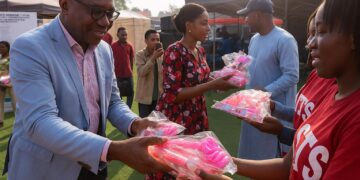
He also saluted the humanitarian and social actions associated with Antoinette Sassou N’Guesso through the Fondation Congo Assistance, citing support for vulnerable groups in areas linked to health, early childhood, education, women’s economic empowerment, and assistance to people in fragile situations.
President Sassou N’Guesso’s 2026 peace doctrine
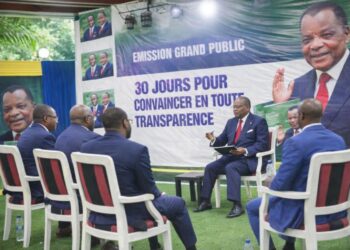
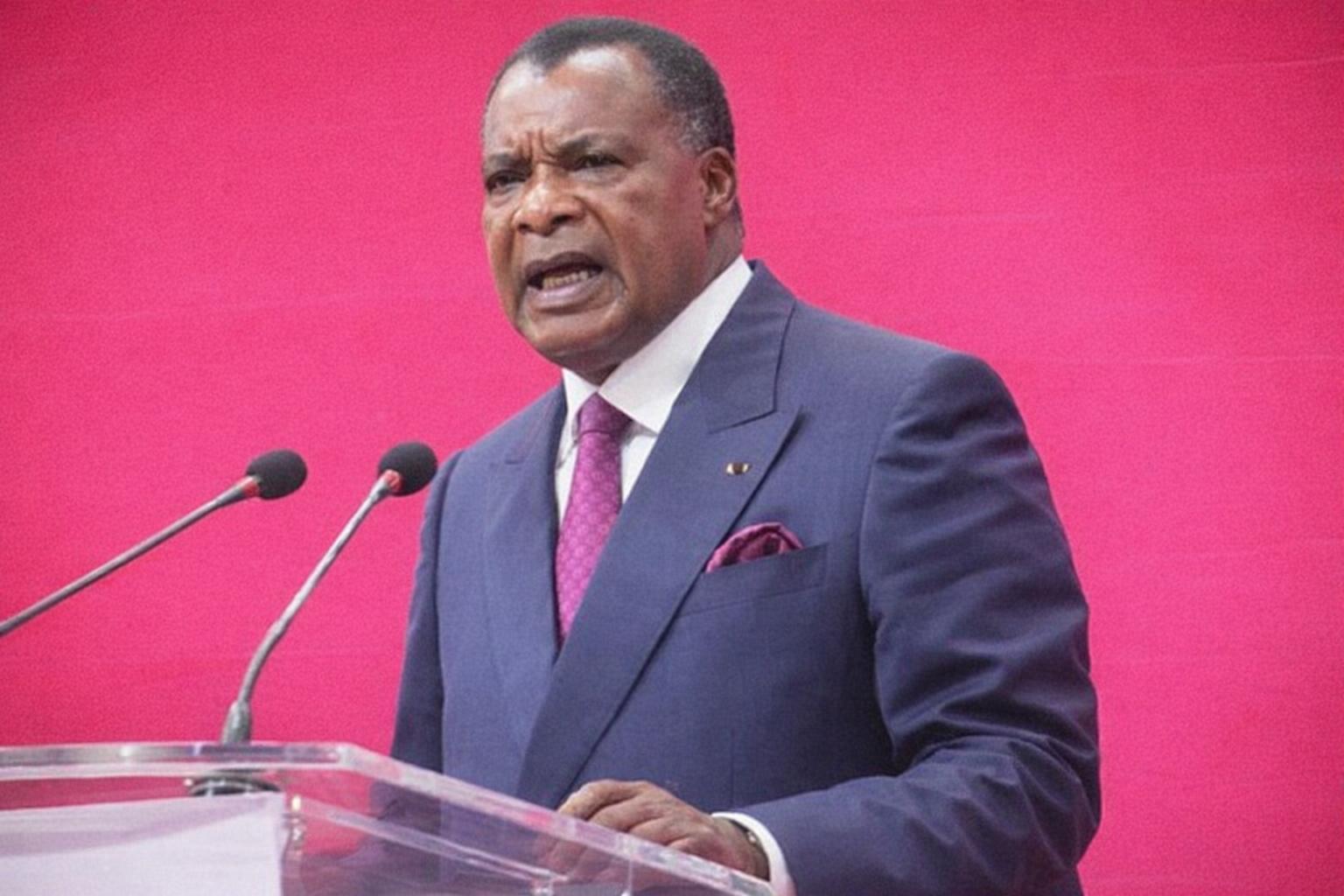
Responding to the greetings, President Denis Sassou N’Guesso delivered a lengthy address centred on peace, national concord, and the importance of moral and civic values in the approach to the presidential election scheduled for March 2026. The speech positioned cohesion as a strategic national asset.
He called on political parties, organisations, religious communities, women, and youth to work for unity, dialogue, mutual respect, and social cohesion. He reiterated the national motto, “Unity – Work – Progress,” and extended wishes of peace, longevity, and happiness for 2026, urging every Congolese citizen to contribute to peace and solidarity.
Decision signals for investors and public leaders
For investors and public decision-makers, the ceremony’s messaging projects a governance narrative that links stability with a development agenda: infrastructure expansion, agriculture-led value creation, investment zones, and social protection instruments. In this framing, peace is not only a political objective but an economic enabler.
The combined speeches also suggest a diplomatic posture where climate and forest issues remain part of Congo-Brazzaville’s international positioning, while domestic priorities emphasise productive transformation and social cohesion. In a pre-electoral context, the official tone privileges dialogue, civic discipline, and institutional continuity.