








SNPC scholarships drive new year talent push
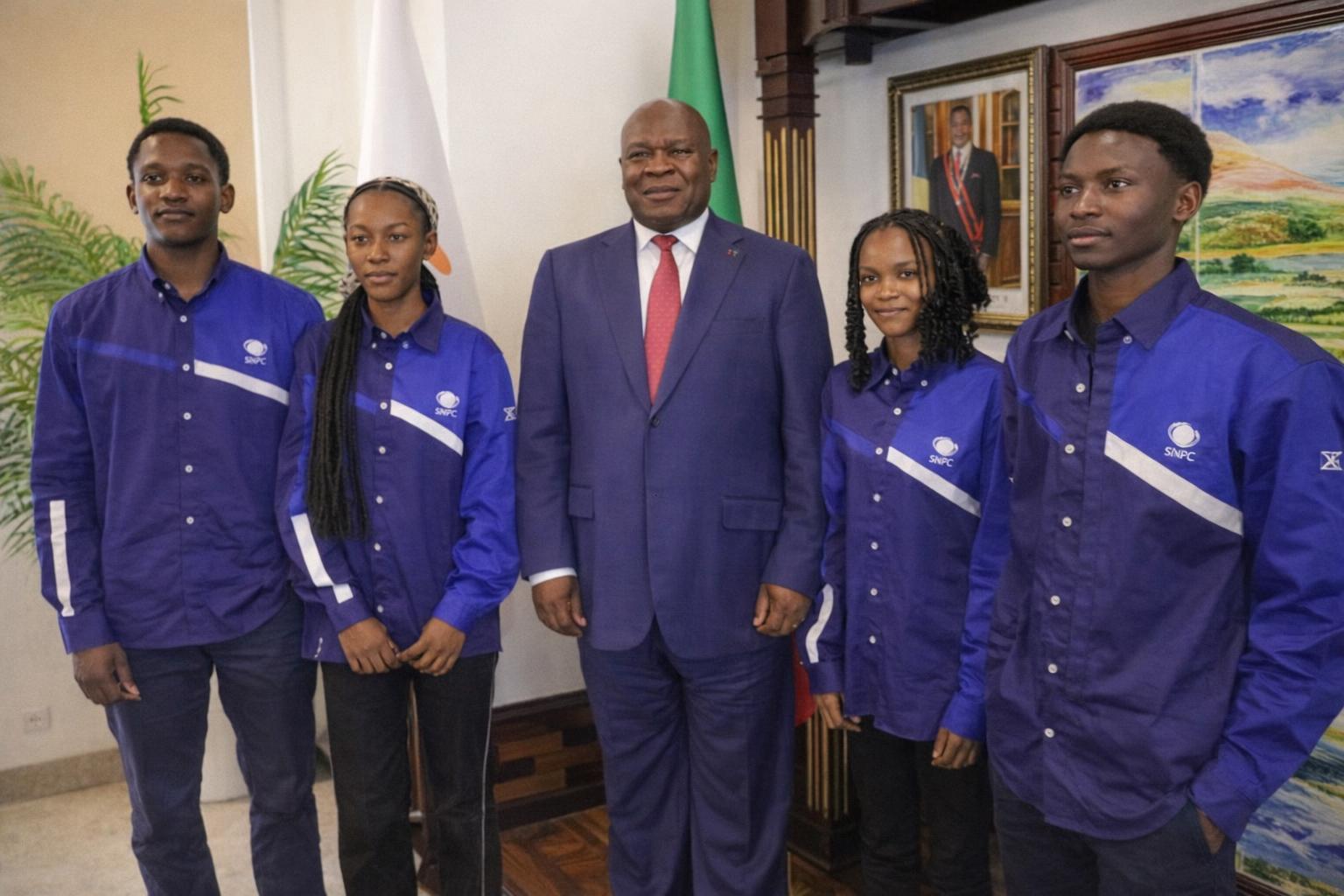
The National Oil Company of Congo-Brazzaville, SNPC, opened 2026 with a visible commitment to talent development, signing new scholarship contracts on 5 January that will send four high-performing school-leavers to the Baku Higher Oil School, a flagship engineering university in Azerbaijan.
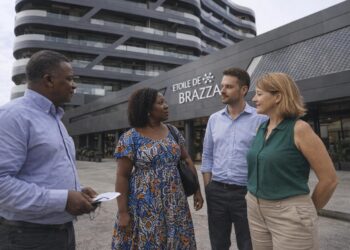
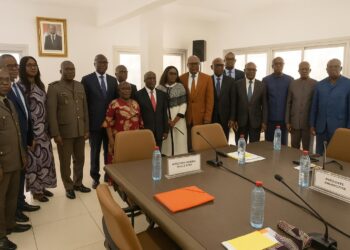
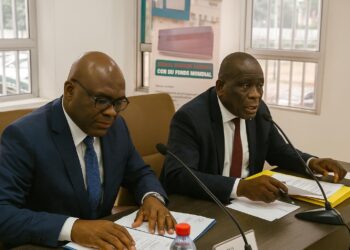
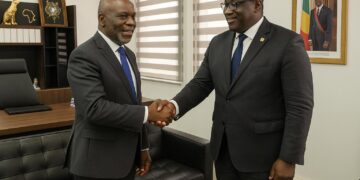
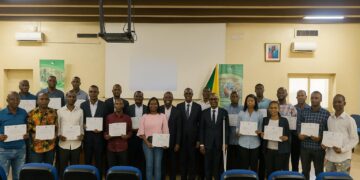
General manager Maixent Raoul Ominga received the laureates at SNPC’s Brazzaville headquarters, completing in-person signing formalities that anchor the re-designed Excellence Scholarships programme announced in the president’s 2026 new-year address, and formally opening a fresh cycle of outbound academic placements.
Profiles of the 2026 laureates
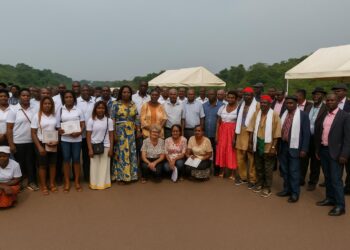
The cohort features Géniale Joviale Bokouango, national science-stream valedictorian; Ruth-Victoire Bouop-Ngakana; Le Bonheur La Grâce Etou Nko; and Prefils Nixon Louzolo Mikele. Each contract secures a five-year path to an engineering master’s, including tuition, accommodation, health insurance and an annual stipend aligned with BEAC cost-of-living benchmarks.
BHOS, ranked among the Caucasus region’s top petroleum institutes, delivers ABET-compatible curricula blending reservoir modelling, offshore safety and energy transition electives. Graduates have historically enjoyed placement rates above 90 percent within SOCAR, TotalEnergies or contractors, a performance indicator SNPC aims to replicate for Congolese alumni.
Expanding overseas learning network
The latest dispatch lifts the tally of SNPC-funded scholars abroad to twenty-nine in Algeria and seventeen in Azerbaijan, creating a dispersed but coordinated learning network. A dedicated digital dashboard tracks academic scores, language proficiency and internship placements, allowing headquarters to intervene rapidly if progress wanes.
Management frames the scholarship pipeline as a vital component of national content strategy, complementing in-country centres such as the École Supérieure de Géologie et Mines de Madingou. By 2030, planners target a 60 percent local-staff ratio in specialist upstream roles, compared with roughly 35 percent today.
National development and industry demand
Human-capital mobilisation also aligns with Brazzaville’s 2024-2028 National Development Plan, which earmarks 3 percent of annual hydrocarbon receipts for training, research and technology transfer. Analysts interpret the move as a soft hedge against future price volatility, positioning skills rather than barrels as value drivers.
Industry associations note that the country graduates barely 150 petroleum engineers a year, versus an estimated annual demand of 230. The scholarship mechanism, therefore, covers about 15 percent of the gap, while private service companies remain encouraged to expand apprenticeship quotas under revised local-content guidelines.
For lenders and contractors following Congo’s upcoming 7th licensing round, a sturdier domestic talent pool could translate into lower mobilisation costs and smoother project timelines. Fitch Solutions argues that operational risk scores improve when expatriate reliance drops below 40 percent, a threshold attainable if scholarship momentum persists.
Azerbaijan partnership deepens energy ties
From a geopolitical vantage, the partnership with Azerbaijan extends beyond classrooms. Trade officials are discussing a memorandum on gas monetisation techniques, drawing on SOCAR’s experience in LNG mini-trains. Such cooperation complements Congo’s stated ambition to become a regional gas hub serving Atlantic basin markets.
Governance and financing safeguards
Internally, SNPC has established a cross-functional monitoring committee comprising human resources, finance and exploration managers. Monthly scorecards, validated by the Ministry of Hydrocarbons, evaluate budget execution, academic credits earned and eventual work-back obligations, ensuring that scholarship spending remains outcome-oriented and transparent to parliamentary oversight.
Funding relies on a ring-fenced allocation within the Exploration and Production Sharing Account, thereby insulating educational expenses from short-term market swings. According to the 2026 finance law, the earmark represents just 0.4 percent of gross upstream revenue, a ratio auditors view as fiscally conservative.
Local banks eyeing project-finance mandates in Tilapia II are studying scholarship co-funding within their ESG scorecards. Analysts say blended finance could double annual slots without pressuring SNPC’s balance sheet or sovereign limits.
Curriculum innovation and diaspora links
Curricula now incorporate modules on carbon accounting and digital drilling, reflecting Congo’s dual objective of maximising petroleum output while preparing for lower-emission operations. A pilot remote-learning lab, co-funded by Huawei, enables the scholars to collaborate with local university peers on sensor data coming from Pointe-Noire installations.
Officials emphasise the ripple effect among the diaspora. Alumni already settled in Paris or Calgary are volunteering as virtual mentors, reviewing project reports and advising on internship interviews. The initiative, supported by the Ministry of Foreign Affairs, nurtures a network that can funnel expertise back home.
Inclusion, advocacy and public reception
Gender representation also receives attention. Two of the four new scholars are women, bringing the female share in the programme to 38 percent, close to the 40 percent target set by the African Petroleum Producers Organization. Industry advocates point to diversified teams as drivers of innovation and safety.
“You carry the flag of a nation that believes in performance, innovation and collective engagement,” Ominga told the students, reiterating the company’s ambition to build futures together. Social-media footage of the ceremony has attracted positive comments from parents and sector professionals, reinforcing public legitimacy for the initiative.
Outlook for investors
With the contracts now activated and departure formalities completed, the four scholars are scheduled to join the spring intake in Baku on 1 February. Their progress, and that of subsequent cohorts, will be closely watched by investors gauging whether Congo’s human-capital curve matches its resource potential.