




















Botswana inks $5.5bn power MoU
The $5.5 billion memorandum of understanding inked in Gaborone positions Botswana among Southern Africa’s most ambitious electricity market reformers. By pairing Turkish conglomerate Ulsan Holding with global energy investors, the seven-year programme seeks to retrofit ageing coal assets and fast-track low-carbon capacity.
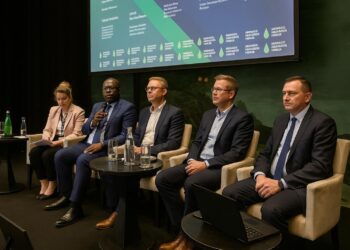
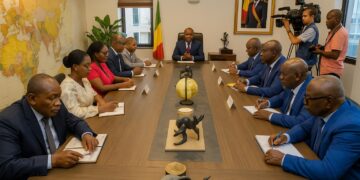
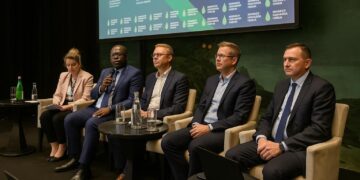
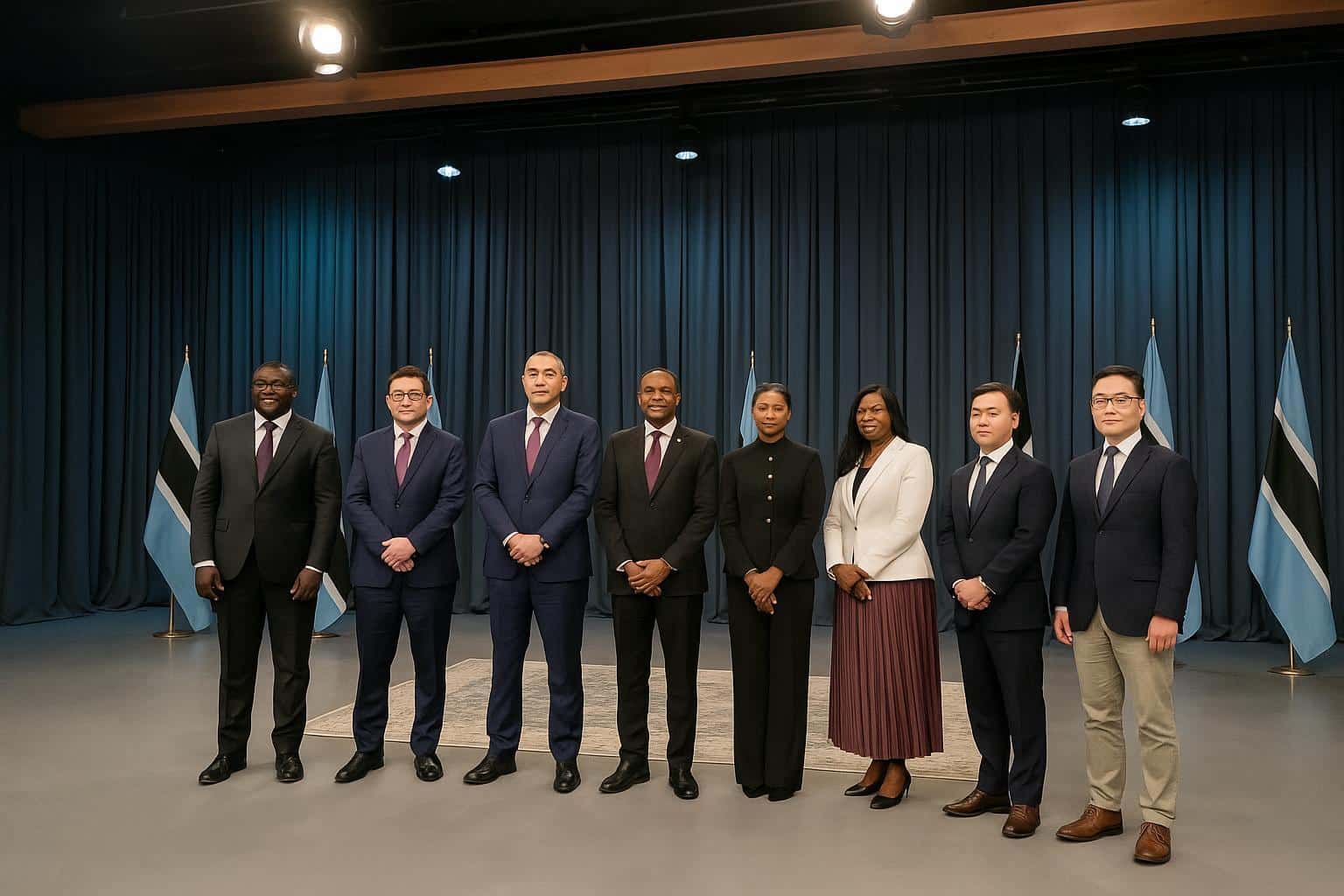
Energy minister Bogolo Joy Kenewendo, flanked by Ulsan chairman Fatih Gülsün and senior executives from Mercuria Energy Trading, IGI and Tfgl, described the accord as a “transformational public-private alliance” that aligns with the government’s Integrated Resource Plan and its pledge to reach net-zero by 2050.
Morupule plants to go high-efficiency
Under the deal, Morupule A and B—Botswana’s main baseload stations—will be overhauled with high-efficiency, low-emission technologies. Engineers target a combined availability factor above 85 percent, a leap from today’s 60 percent average that frequently forces imports from South Africa’s Eskom.
Solar rollout and clean-coal blend
Parallel solar farms totaling 600 megawatts will be rolled out across the Kalahari rim, leveraging Botswana’s world-class irradiance. Ulsan says construction methods tested in Turkey’s Konya plateau will shorten lead times to 18 months, while local contractors receive mandatory 30 percent content under citizen-economic-empowerment rules.
Clean-coal advocates within the consortium are backing an additional 400 megawatts of ultra-supercritical units equipped for carbon capture readiness. Although final engineering is still being optimised, Mercuria’s chief investment officer Jianyun Sun argues the design offers an “insurance policy” against potential intermittency risks tied to photovoltaics.
Export potential via SAPP
Combined, the revamped coal blocks and new renewables raise installed capacity to 1.5 gigawatts. Officials project a 15 percent reserve margin by 2029, enabling Botswana to sell surplus electricity through the Southern African Power Pool’s competitive day-ahead market, where prices averaged eight US cents per kWh in 2023.
Ulsan’s wider African footprint
For Ulsan, the Botswana venture complements a broader African portfolio increasingly anchored in the Republic of Congo. The firm plans to ship the first iron ore from Mayoko in 2026, initially at three million tonnes per annum, ramping to five million after year three.
Congo iron project accelerates
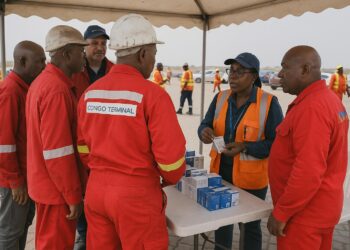
Success hinges on upgrading the 465-kilometre rail corridor linking Mayoko to Pointe-Noire. Rehabilitation works, executed alongside Turkish logistics group Albayrak, include replacing wooden sleepers with concrete, installing automated signalling and increasing axle loads to 20 tonnes, a specification aligned with emerging iron corridor norms in West Africa.
Talks are progressing with Brazzaville’s authorities for an industrial plot inside the Pointe-Noire special economic zone. Ulsan envisions an integrated complex producing iron-ore pellets, direct-reduced iron and eventually flat steel coil, powered by a dedicated 120-megawatt clean-energy plant that could blend solar with natural-gas peaking units.
Logistics and industrialisation strategy
Company officials emphasise that 80 percent of the group’s 2025-2026 African capital budget—roughly US$240 million—is earmarked for Congo projects. The remaining 20 percent will finance equity contributions to the Morupule rehabilitation, while debt is expected to be syndicated by a club of Gulf and Asian lenders.
In Gaborone, policymakers view diversified funding as a hedge against revenue fluctuations in the diamond sector. According to Permanent Secretary Mmetla Masire, mining royalties covered 64 percent of the power utility’s tariff subsidy last fiscal year, a model “no longer sustainable under soft gemstone prices”.
Regional analysts note that coupling coal asset rehabilitation with solar build-out mirrors South Africa’s just energy transition framework. While Botswana has yet to secure concessional climate finance, the presence of Mercuria and IGI could facilitate structured offtake agreements that meet ESG metrics sought by European investors.
Critics of clean-coal proposals caution that carbon capture economics remain unproven at modest scale. However, Jianyun Sun insists capex assumptions incorporate falling equipment costs observed in North America, and that a staged deployment strategy allows Botswana to pause investment if global benchmarks fail to materialise.
Financing, governance and outlook
In Congo, Minister of Mines Pierre Oba welcomed Ulsan’s forward-integration plan, highlighting the government’s objective to add value to raw ore domestically and generate skilled employment. “Steel downstreaming will sharpen our industrial competitiveness under AfCFTA while respecting Congo’s climate commitments,” he told state television.
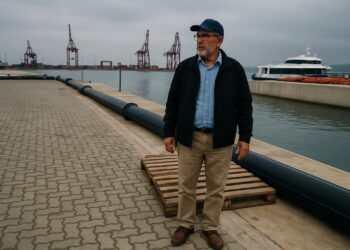
Industry observers underline that Pointe-Noire’s deep-water port, already handling 30 million tonnes annually, offers cost advantages over congested Atlantic rivals. Ulsan’s mining chief Mehmet Kosar estimates rail-to-port logistics costs could sit below US$22 per tonne, placing Congolese fines in the third quartile of the delivered-China cost curve.
Governance clauses require quarterly disclosure of environmental metrics audited by the Botswana Energy Regulatory Authority. Congo’s Ministry of Finance is drafting similar transparency rules to align forthcoming extractive contracts with the IMF debt-sustainability framework.
Analysts say Ulsan’s pivot from defence to resources reflects Turkish firms’ wider push into South-South corridors. EXX Advisory predicts stronger Ankara-Brazzaville ties could unlock Türk Eximbank backing, easing currency-convertibility risk.
Whether in deserts of Serowe or forests of Niari, Ulsan’s twin energy-and-metals gambit reflects a strategic calculus: anchor traditional resources in cleaner processes to keep capital flowing amid global decarbonisation. For investors seeking diversified African exposure, the Turkish group’s disciplined timeline warrants close monitoring.