


























UN–CNTR Talks Signal Governance Momentum
UN agencies operating in the Republic of the Congo have reaffirmed their commitment to support the National Commission for Transparency and Responsibility in Public Finance Management (CNTR). The stated objective is to consolidate financial governance and encourage more transparent, accountable management of public resources.
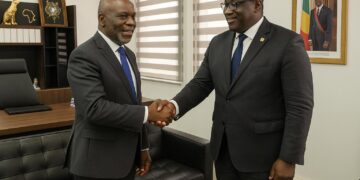
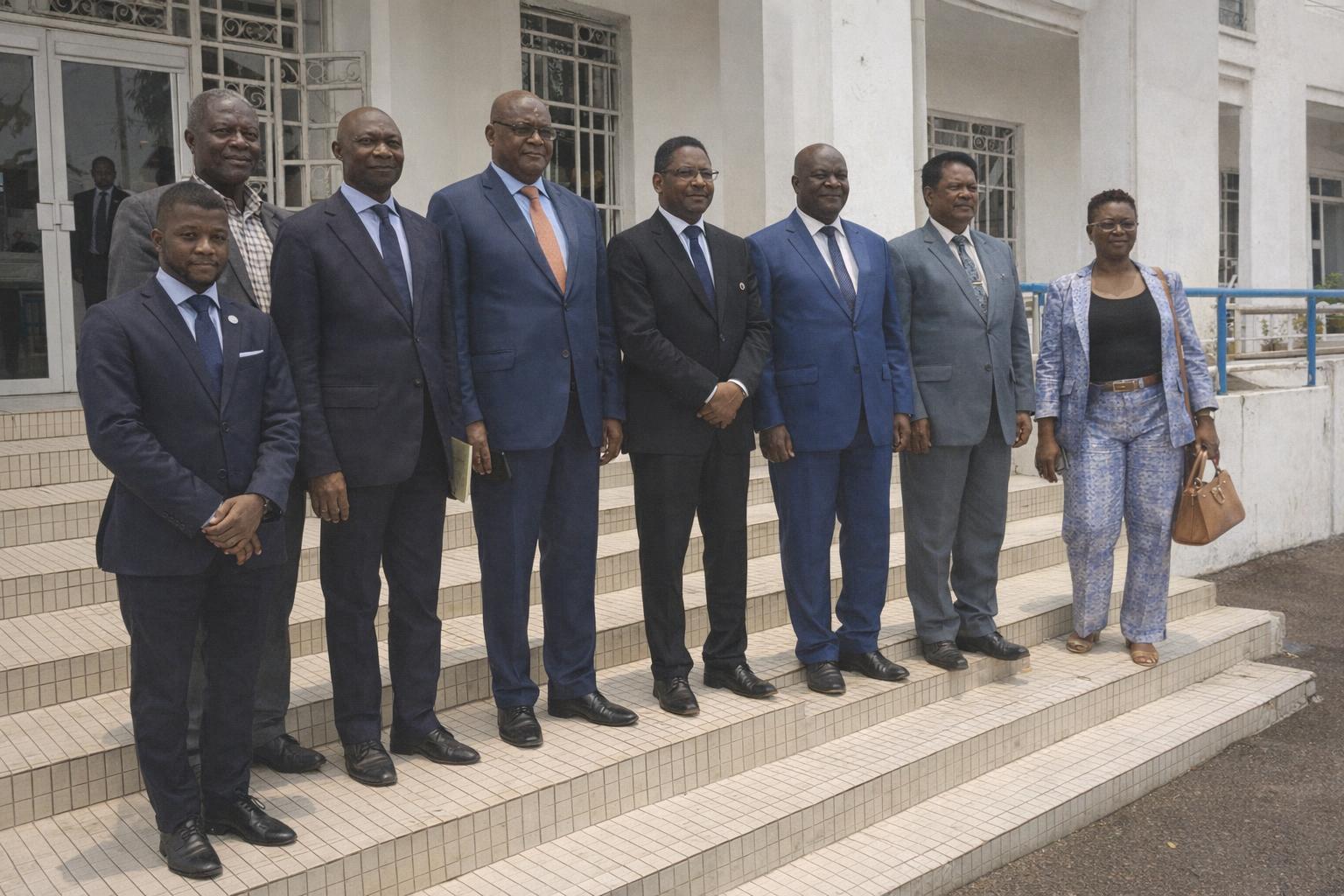
The message was reiterated during a working session held on 12 January in Brazzaville. The meeting brought together the UN Resident Coordinator in Congo, Abdourahamane Diallo, and a CNTR delegation led by its president, Joseph Mana Fouafoua. Both sides agreed to maintain and deepen cooperation.
Alignment With UN Cooperation Framework 2027-2031
A key element of the discussion was the perspective of the upcoming UN cooperation framework for Congo covering 2027-2031. The two parties framed their partnership as part of a broader effort to sustain institutional dialogue and reinforce governance-related outcomes within the UN system’s country programming.
In this context, the CNTR presented its priorities and signaled that technical and strategic alignment with UN agencies could help anchor its work within longer-term public-sector performance goals. The partnership was described as a platform to move from planning to implementation across agreed governance measures.
CNTR’s Mandate and 2029 Institutional Ambition
Described as an independent body, the CNTR aims to become the national reference institution for transparency and responsibility in public finance management by 2029. This positioning reflects an ambition to make its mandate more visible and more operational across public administrations.
Joseph Mana Fouafoua presented the meeting as an important step in institutional dialogue. He said the CNTR came to explain its institution, the missions assigned by law, and the constraints it faces in putting those missions into practice.
Making the Transparency Code Known Inside Government
According to the CNTR president, one core mission is to oversee implementation of the Code of Transparency and Responsibility in Public Finance Management. He underlined that the text remains insufficiently known within public administrations, which can limit consistent application and the overall impact of accountability mechanisms.
In response, the CNTR plans to intensify outreach, support, and training. The institution also intends to seek more structured support from technical and financial partners to strengthen its operational capacity and broaden the adoption of good practices in public financial management.
Capacity Needs and Partner Support for Five Missions
Joseph Mana Fouafoua emphasized the practical requirements attached to the CNTR’s legal mandate. He noted a need for additional expertise and resources to deliver effectively on the five missions assigned by law, presenting external support as a complement to national efforts rather than a substitute for them.
This framing places capacity building at the center of the cooperation agenda. It also suggests that the CNTR is prioritizing deliverables that can be institutionalized, particularly through training programs and tools that can be maintained over time by public-sector actors.
UN View: Governance as a Core Development Pillar
Abdourahamane Diallo, for his part, highlighted the CNTR’s strategic role within the national governance architecture. He stated that governance is the number one pillar of the UN cooperation framework for 2020-2026, alongside education, health, and economic diversification.
Diallo also stressed that transparency, accountability, and effective management of public resources are central to development objectives. In this perspective, strengthening oversight and institutional performance is treated as an enabling condition for broader sector outcomes and public trust.
From Action Plan to Implementation: The 2025-2029 Priority
The Resident Coordinator pointed to support already provided by the United Nations Development Programme for the preparation of the CNTR Action Plan 2025-2029. He also underscored the importance of ensuring that the plan is now effectively implemented, signaling a shift toward execution and measurable follow-through.
This emphasis on implementation reflects a common challenge in public governance reforms, where planning instruments require sustained coordination, resources, and monitoring to translate into tangible institutional change. The UN side presented continued support as a means to reinforce that transition.
Cooperation Tracks: Digital Tools, Training, Mobilisation
At the end of the exchanges, several areas for collaboration were outlined. These included digitalising the CNTR’s communication tools, strengthening the capacities of public actors, and mobilising UN agencies more broadly, together with technical and financial partners.
Taken together, these avenues suggest a cooperation agenda oriented toward practical levers: visibility and communication, skills development within administrations, and coordinated partner engagement. The overall tone of the meeting indicated continuity, with an intention to scale up existing support in a structured manner.