






US Access Program lands in Pointe-Noire
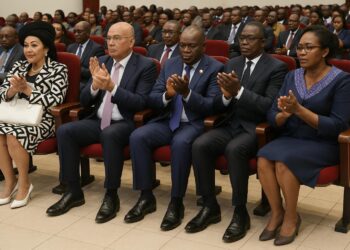
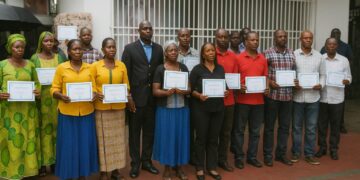
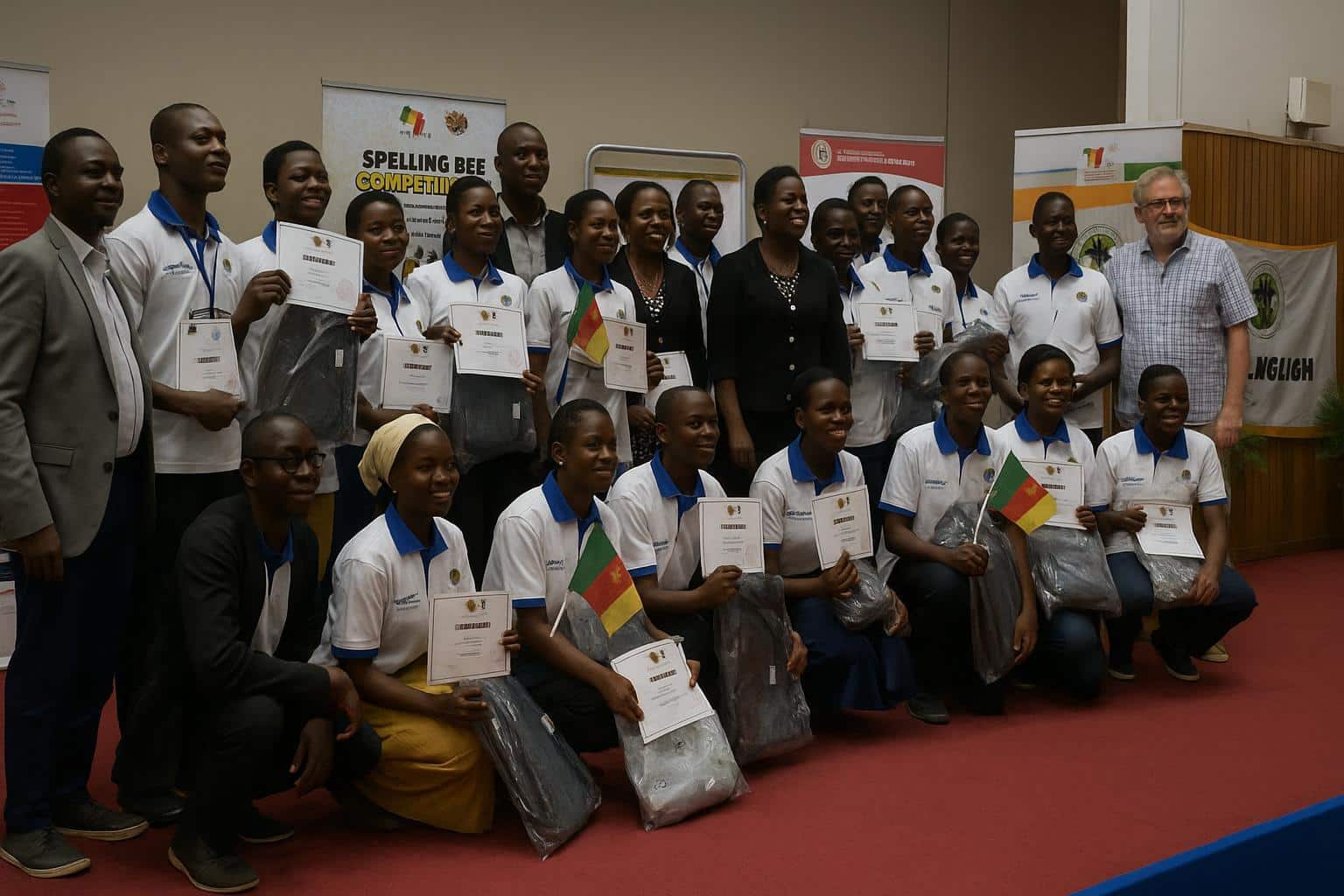
At the coastal heart of Congo’s economic capital, 25 tenth-graders from three public high schools began a new chapter this month as beneficiaries of the United States’ English Access Microscholarship program.
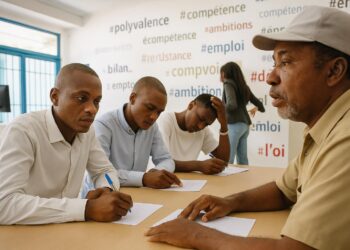
The two-year training, officially launched on 9 December in Pointe-Noire, blends intensive English instruction with digital-literacy workshops and personal-development coaching. The package is designed to sharpen employability while opening academic doors at home and abroad.
Financial backing and expansion to Brazzaville
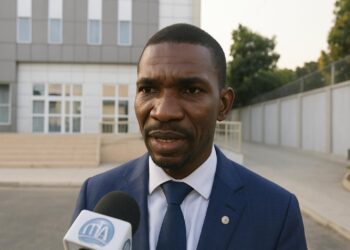
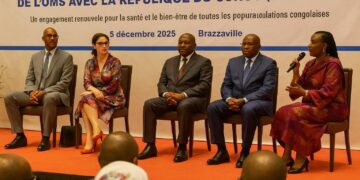
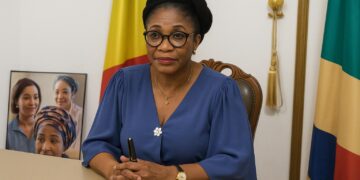
Chargée d’affaires Amanda Jacobsen praised the initiative, noting that the embassy’s initial grant of five thousand dollars—about 4.7 million CFA francs—had already fortified local English clubs and seeded healthy academic competition within the city’s classrooms.
A subsequent commitment of eighty-five thousand dollars—roughly 45 million CFA francs—now bankrolls two new cohorts, one in Brazzaville and another in Pointe-Noire, raising the national tally of Access scholars from 75 to 125 since the program’s arrival in 2013.
Partner schools and comprehensive support package
In Pointe-Noire, the chosen institutions—Lycée de Mpaka, Lycée Pointe-Noire 2 and Lycée Siafoumou—share a common challenge: overcrowded classes and limited language facilities. The stipend covers textbooks, digital licenses, meals and transport, lifting a burden from low-income families.
Beyond vocabulary and grammar, facilitators will coach learners on coding fundamentals, safe internet navigation and collaborative problem-solving. According to Jacobsen, these modules are meant to “strengthen self-confidence, broaden horizons and connect motivated youth eager to advance their communities.”
Local leadership welcomes opportunity
The Congolese education ministry welcomed the support. Departmental director Frédéric César Bayonne called the scholarship “a timely platform for discipline and perseverance,” urging recipients to treat the opportunity as a springboard toward future leadership rather than a mere extracurricular diversion.
Organisers emphasise that fluency in English and basic coding unlocks stronger employment and education prospects, echoing the program’s stated objective of equipping beneficiaries for future job markets and university admissions.
Monitoring impact over the next two years
Since 2013, Access alumni in Congo have reportedly advanced to local universities and community youth councils, though comprehensive tracking remains informal. The upcoming cohorts offer an opportunity to formalise impact metrics over the next twenty-four months.
Conelta, the local partner, will supervise classes, weekend immersion camps and community service, forwarding regular reports to the U.S. embassy and education ministry to ensure alignment with national curricula.
Budget lines cover learning materials, meals and transport, a package designed to keep attendance high and drop-outs negligible throughout the two-year span from 15 December 2025 to 30 November 2027.
Student enthusiasm and networking benefits
During the launch, students expressed enthusiasm, describing the scholarship as a bridge toward brighter futures through stronger language and digital abilities.
Jacobsen underlined that Access also creates a network, enabling learners to meet peers equally committed to pushing their communities forward, thereby amplifying the social dividend of every classroom hour.
Education authorities eye future collaborations
The education directorate signalled that lessons drawn from the cohort would inform future collaborations with international partners, a statement consistent with its encouragement toward discipline and perseverance voiced at the ceremony.
The timetable announced at the launch states that sessions will unfold between 15 December 2025 and 30 November 2027, covering English, digital literacy and personal development throughout the period.
Anticipated ripple effects beyond 2027
Preparations are under way in the three selected schools, where parents of economically disadvantaged students view the Access badge as a beacon of resilience amid constrained household budgets.
By the close of 2027, Pointe-Noire will record its initial Access graduates, each equipped with practical English, foundational tech skills and reinforced self-confidence—assets expected to resonate through classrooms, households and the broader Congolese economy.
The scholarship’s logistical envelope matters. Each participant receives classroom supplies, daily meals and transport stipends, removing the hidden costs that can push talented but vulnerable pupils toward absenteeism or early drop-out.
Cultural enrichment figures prominently as well. Organisers plan field visits and American-style holiday celebrations to immerse learners in real-life situations where they must use newly acquired vocabulary and teamwork skills.
Leadership sessions, another pillar woven into the curriculum, encourage students to initiate micro-projects in their neighbourhoods, reinforcing the idea that community development begins with small, well-planned actions.
According to embassy materials distributed on launch day, trainees will also gain exposure to basic software suites and online research techniques, competencies increasingly required by universities and technical institutes in Brazzaville and abroad.
Collectively, these modules aim to build a cohort that can later mentor peers, creating a multiplier effect that extends far beyond the original group of fifty scholars in the 2025–2027 cycle.
Observers at the launch suggested that Pointe-Noire’s stature as economic capital gives the pilot high visibility, strengthening chances that successful practices will inform future youth initiatives nationwide.
For now, the focus remains on the 25 new scholars, their teachers and families, who will together test a model meant to prove that equitable access to language and technology training can be delivered—efficiently and at scale—in Congo-Brazzaville.