





























Pointe-Noire gathering resets regional ambitions
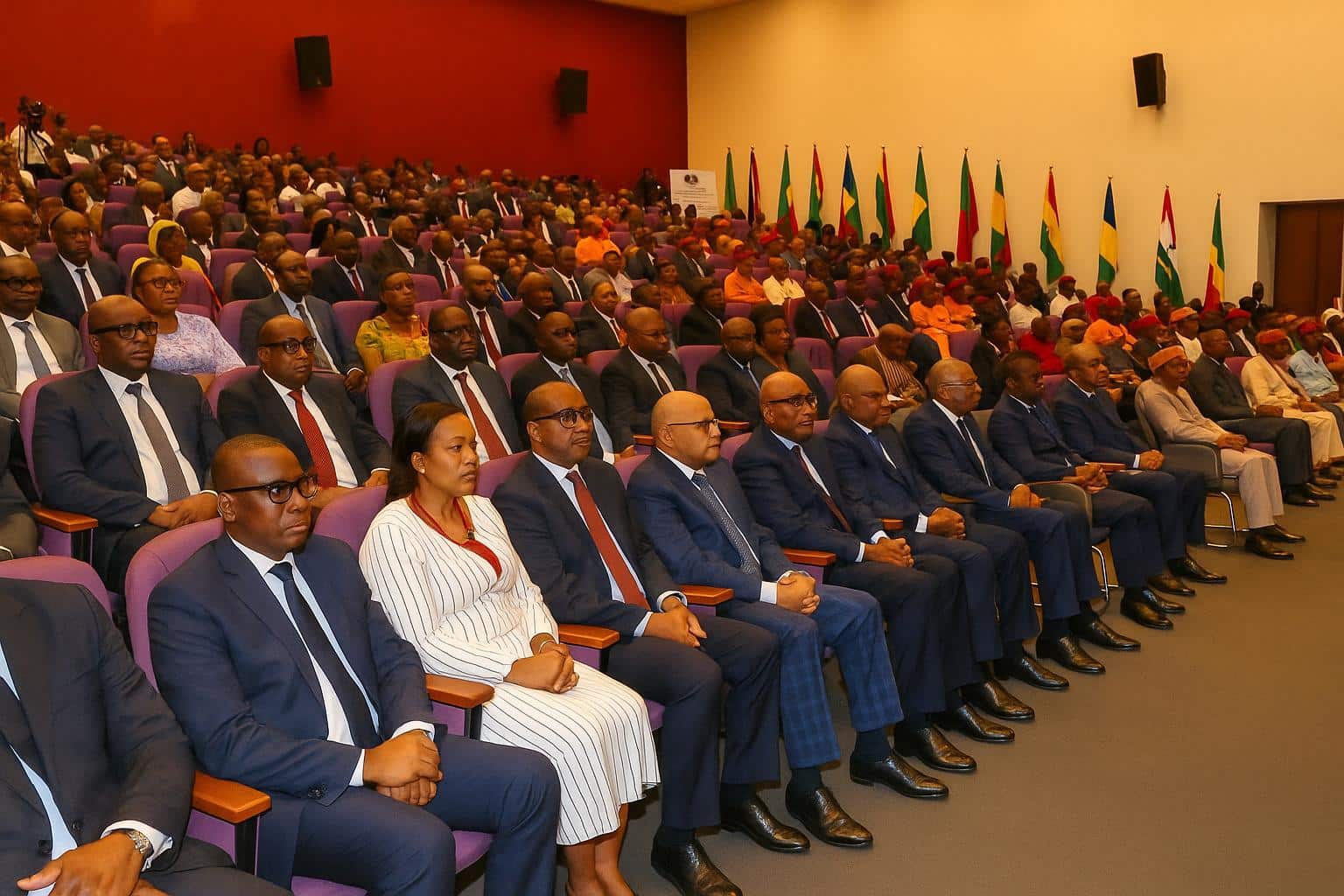
From 4 to 7 November, the glass-fronted headquarters of the Port Autonome de Pointe-Noire hosted the 45th council of the Port Management Association of West and Central Africa, known by its French acronym AGPAOC. Twenty-four full members and several observer states filled the auditorium overlooking the Atlantic swell.
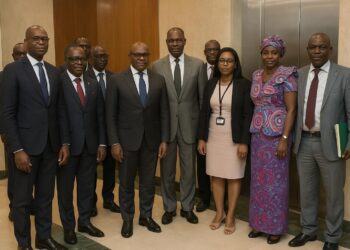
Congo’s Prime Minister Anatole Collinet Makosso opened proceedings beside Transport Minister Ingrid Olga Ghislaine Ebouka-Babackas. Applauding what he called “economic beacons and social platforms”, the premier urged delegates to cement investor confidence through credible environmental and governance standards, echoing positions long defended by UNCTAD and the World Bank.
Urban pressure tests port domain management
Most West African terminals were built decades ago on the fringe of modest towns that have since mushroomed. Land once reserved for quays and logistics has become contested by housing, retail and informal activity, eroding safety buffers and complicating expansion plans (UNCTAD, 2023).
Administrators must navigate overlapping mandates among port authorities, municipalities and line ministries. Legal titles are sometimes incomplete, exposing operators to compensation claims or slow court processes. Delegates agreed that ad hoc site allocation no longer meets investor due diligence or the insurance standards of global liner alliances.
Michael Luguje, Director-General of the Ghana Ports and Harbours Authority and current AGPAOC chair, summed it up: “We are custodians, not landlords. The city and the port must co-design disputed spaces if we expect private capital to flow without friction.”
Sustainability moves from pledge to performance
AGPAOC working groups insisted that climate targets can dovetail with efficiency gains. Shore-power hookups, digital lane management and dredging by hybrid vessels were cited as quick wins able to trim bunker fuel and operating costs by up to 15 percent in pilot studies (IMO, 2022).
Ports were encouraged to seek ISO 14001 or EcoPorts certification within three years. The Cape Town terminal and Côte d’Ivoire’s San-Pedro already hold such labels, offering proof that African facilities can meet European charterer requirements without compromising throughput.
Séraphin Bhalat, head of the host PAPN, said Pointe-Noire would embed emissions reporting in its next concession bids. “Carbon accounting is becoming as critical as cargo accounting,” he told reporters, indicating that Congo-Brazzaville aims to monetise its rainforest assets alongside maritime decarbonisation.
Twenty recommendations and investor signals
The final communiqué lists twenty actions, topped by a rewrite of AGPAOC’s founding statutes to speed collective procurement, technical assistance and dispute resolution. Lawyers from Benin and Senegal will present draft clauses by mid-2024, paving the way for a notarised charter.
Second, members will pool traffic, tariff and dwell-time data on a single dashboard compatible with the PortCallOps standard already used in Singapore and Rotterdam. The API will let shipping lines compare performance across the Gulf of Guinea in near real time, boosting transparency demanded by rating agencies.
Third, ports agreed to publish five-year land-use plans negotiated with city councils. Such visibility, delegates said, should unlock blended finance from the African Development Bank’s climate window and from commercial lenders keen to de-risk greenfield terminals.
PAPN award underlines Congo’s logistics strategy
Beyond hosting, Pointe-Noire walked away with the 2024 prize for best transit traffic growth. Minister Ebouka-Babackas credited what she called President Denis Sassou Nguesso’s “clear vision of international standards”, citing berth deepening to 16 metres and last-mile rail links to the mining hinterland.
The port now handles over 25 percent of hinterland cargo bound for the DRC and Zambia, positioning Congo as a redundancy corridor to Durban and Walvis Bay. French container line CMA CGM recently extended its EURAF 4 service to Pointe-Noire, reflecting rising confidence among carriers (Company filings, 2023).
Officials added that the award strengthens the case for a secondary container terminal and a liquefied natural gas bunkering station, projects estimated at USD 650 million and currently under feasibility review with support from the Japan International Cooperation Agency.
Looking ahead to the 46th council
The next AGPAOC council is slated for Lagos in 2025. Nigeria’s Shippers Council signalled interest in hosting a side event on digital customs corridors, an agenda that could dovetail with the AfCFTA’s push for paperless trade certificates (African Development Bank, 2022).
Financing remains a swing factor. While public-private partnerships are common in container operations, the less glamorous real-estate upgrades—fire roads, green buffers, wastewater plants—need clearer revenue streams. Bond issues backed by port dues, popular in Latin America, were floated as replicable models.
Human capital is another priority. Delegates urged universities to align curricula with automated terminal operations and environmental compliance. Côte d’Ivoire’s Institut Maritime chose to pilot a port-city planning module, hoping to feed a pipeline of professionals fluent in both GIS and carbon accounting.
Should these strands converge, analysts believe AGPAOC could turn fragmented coastal assets into a coherent, low-carbon trade platform serving 400 million consumers. Material delivery will be scrutinised at Lagos; yet the Pointe-Noire summit has already nudged the narrative from ambition to execution.