



















World Bank and Congo: A renewed digital alliance
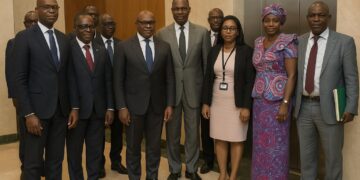
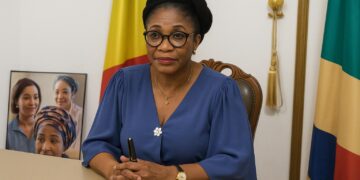
In Brazzaville, newly appointed World Bank Resident Representative Alexandra Célestin paid her first courtesy call on Minister of Posts, Telecommunications and the Digital Economy Léon Juste Ibombo, confirming that the multilateral lender will keep partnering with the Republic of Congo under the Project for Accelerating Digital Transformation.
Both officials stressed that the programme has moved from design to execution and now demands meticulous coordination between national agencies, regional carriers and private telecom operators, a point viewed as critical for avoiding project delays and cost overruns.
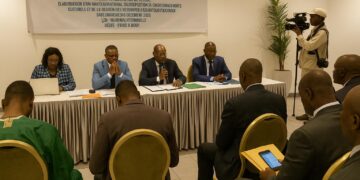
According to Ibombo, the meeting also provided an opportunity to scan every component of the blueprint, spot bottlenecks and craft rapid remedies, mirroring the results-focused style frequently promoted by President Denis Sassou Nguesso when monitoring flagship infrastructure schemes.
Financing the US$100 million broadband push
The digital acceleration project is backed by a US$100 million International Development Association credit that became effective earlier this year and remains on track, Célestin confirmed, emphasising that the disbursement calendar is aligned with the government’s procurement milestones.
Resources will finance towers and microwave links in underserved districts, cybersecurity upgrades for public platforms and technical assistance for regulatory harmonisation, reflecting a holistic approach that couples hard assets and soft reforms, she said during remarks released by the ministry.
International observers note that Congo’s financing envelope is comparable to similar digital projects in neighbouring states, suggesting the allocation is sufficiently robust to reach backbone coverage targets without jeopardising fiscal prudence, especially as concessional terms cap servicing costs.
Anchoring the 2030 Digital Strategy
The PATN dovetails with the national Digital Strategy 2030, a roadmap drafted with technical input from the Bank that envisions full geographic connectivity, universal digital identity and greater online service adoption across health, education and customs, according to the minister.
Policy analysts in Brazzaville argue this alignment is crucial, because it clusters the broadband rollout, e-government platforms and talent-skilling schemes within one coherent performance framework, simplifying supervision for both the Treasury and development partners.
Ibombo reiterated that the administration seeks to transform the Republic of Congo into a fully fledged information society rather than a mere consumer of imported applications, a vision echoed in recent cabinet communiqués.
Implementation status and bottlenecks
Early site surveys have already been completed in several northern departments, while environmental and social impact assessments are undergoing review by the national agency for evaluation and certification, officials revealed after the meeting.
Nonetheless, procurement cycles for passive infrastructure have faced slippage due to global supply-chain disruptions affecting steel and semiconductor inputs; the ministry indicated that accelerated local-content clauses are being negotiated to mitigate further delays.
Célestin insisted that transparency portals anchored in the project’s fiduciary plan would allow citizens, legislators and investors to monitor contract awards in real time, thereby reinforcing governance and investor confidence.
Private sector and investor outlook
While the PATN is publicly financed, opportunities for tower-sharing, fibre leasing and cloud-service provision are expected to emerge as coverage expands, creating space for regional carriers and local start-ups to forge mutually beneficial joint ventures, according to industry consultants consulted after the briefing.
Bank economists underline that each percentage-point increase in broadband penetration can lift GDP by roughly the same magnitude in low-income contexts, suggesting the project’s macroeconomic dividends could materialise swiftly once rural households come online.
Export-driven firms operating in forestry, mining and logistics also anticipate productivity gains from reliable data links, potentially reinforcing Congo’s competitiveness under the African Continental Free Trade Area, a point repeatedly mentioned in business forums.
Governance safeguards and next steps
The World Bank’s standard Environmental and Social Framework applies to the PATN, meaning grievance mechanisms, indigenous peoples’ consultations and gender indicators are embedded in performance clauses, a design that Ibombo described as indispensable for ensuring inclusive growth.
Next on the calendar is the launch of a competitive tender for 4G site construction in the Pool and Plateaux departments, expected before the close of the fiscal year, pending clearance from the national tender board, ministry sources said.
Célestin concluded that sustained dialogue, joint monitoring missions and prompt troubleshooting would keep the initiative on schedule, underscoring the Bank’s commitment to support Congo’s ambition of building a resilient, inclusive digital economy.
Skills development and inclusion agenda
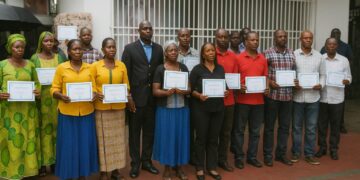
Beyond infrastructure, the PATN allocates funds for capacity-building workshops targeting women entrepreneurs, youth coders and civil servants, with the aim of fostering a local ecosystem able to produce applications that respond to Congolese socio-economic realities.
The minister signalled that partnerships with universities and technical schools would be formalised this quarter, echoing President Sassou Nguesso’s call for a ‘made in Congo’ digital talent pipeline capable of capturing value once cross-border e-commerce regulations are harmonised.
World Bank experience across Africa indicates that coupling broadband with structured skills training can double job-creation effects, an insight that informs the project’s monitoring framework, which tracks both network kilometres and the number of certified graduates.