



























State kicks off Yoro land payouts
Government envoys have started compensating 420 residents of Brazzaville’s Yoro zone ahead of a landmark port expansion, reassuring local title-holders that every payment will be cleared before construction crews move in.
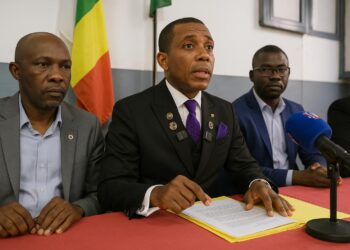
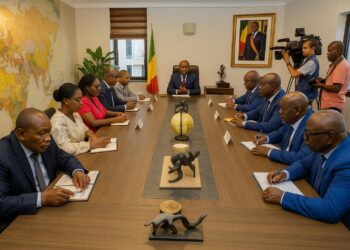
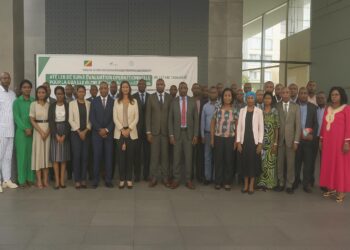
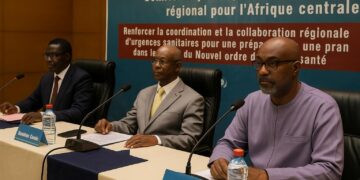
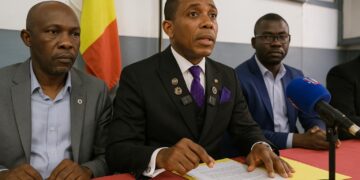
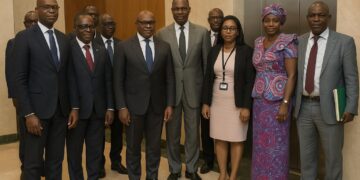
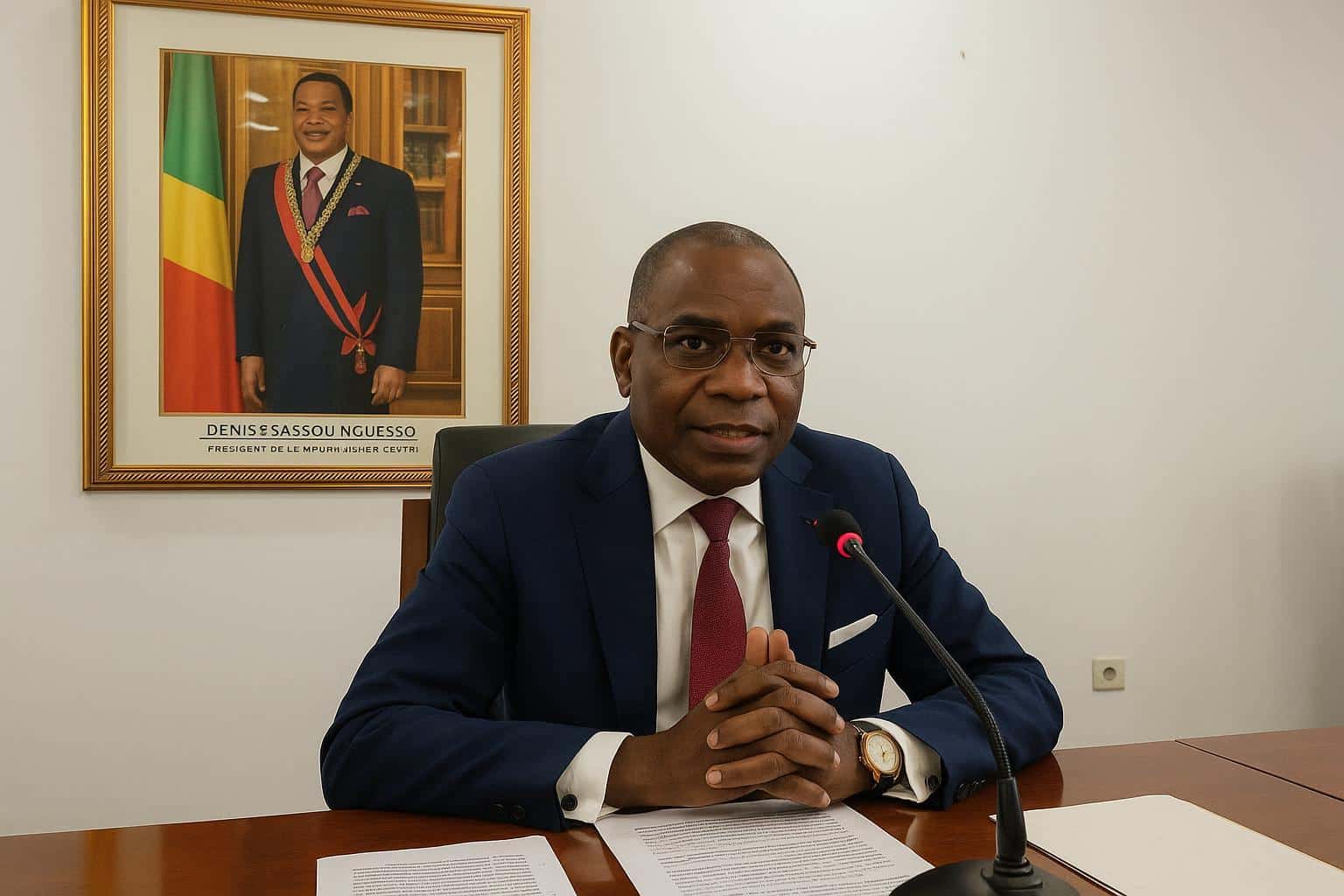
State Minister for Land Affairs and Public Domain Pierre Mabiala met the claimants on 26 November 2025, detailing how the expropriation aligns with Congo’s strictly statutory deadlines and with the earlier June 2023 declaration of public utility.
The land, roughly fifteen hectares straddling Talangaï’s Mpila-Yoro and Dragage districts, is required for new access roads to the river port and to the forthcoming Twin Towers commercial logistics complex in northern Brazzaville.
Clear legal footing boosts investor confidence
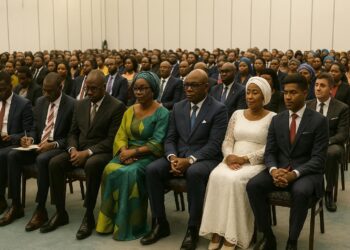
“We have the duty to modernise living conditions,” Mabiala told the hall at Foreign Affairs, adding that adherence to legal timetables shows the state’s respect for property rights and its commitment to orderly urban transformation.
Compensation amounts follow the finance-law tariff grid and reflect both surface and occupancy title. Four hundred nineteen owners chose cash, while one opted for a replacement plot, illustrating flexible redress mechanisms already embedded in Congo’s evolving land-use policy framework since 2018.
Disbursements began on 27 November at the Banque Postale du Congo’s downtown branch. Groups of roughly twenty recipients attend daily with identity papers and proof of ownership, a schedule designed to curb congestion, discourage middlemen and allow on-the-spot clarification of any documentation gaps for transparency.
Officials emphasise that the process complies with the Land Code and the 2008 expropriation ordinance, which require fair value, prior consultation and judicial recourse. Transparency, they argue, is indispensable for sustaining investor confidence across the capital’s fast-moving multimodal logistics corridor and broadening formal mortgage markets.
Community consultations underpin valuations
The valuation committee relied on cadastral surveys updated in 2022, satellite imagery and interviews with customary chiefs to crosscheck occupancy status. Files were then countersigned by the Brazzaville Court of Appeal, adding a judicial layer that residents say strengthened trust in the final price sheets and timelines.
Prior to the decree, technical teams organised door-to-door clinics and three public hearings at the Talangaï mayor’s office, where maps, engineering drawings and resettlement choices were displayed. Civil-society observers from Observatoire congolais des droits de l’homme reported orderly attendance and generally respectful dialogue throughout the sessions.
Port Yoro upgrade redefines logistics hub
Yoro port already handles much of Brazzaville’s charcoal, fresh produce and construction inputs delivered from upriver markets, yet its shallow quays and limited storage capacity create costly bottlenecks during high-season trade peaks and delays.
Under the Central African Corridors Improvement Project, known as PRACAC, new berths, covered warehouses and a digital cargo-tracking terminal will triple handling capacity and shorten truck-barge transfer times, according to preliminary engineering notes circulated by the Ministry of Transport earlier this planning season.
Economic and social dividends ahead
Better fluidity is expected to cut consumer prices in the capital and sharpen Brazzaville’s edge as a regional distribution hub competing with Kinshasa and Pointe-Noire. Logisticians anticipate additional jobs in stevedoring, fleet maintenance and data services, boosting youth employment and training opportunities for recent graduates.
Beyond macro gains, authorities pledge to monitor livelihoods. The resettlement framework lists relocation assistance, preferential hiring and follow-up grievance desks. Development partners, including the African Development Bank, have expressed willingness to co-finance social safeguards, according to senior aides at the Ministry of Economy and Planning.
Several residents interviewed outside the payment hall welcomed the clarity. “If the rate is just and the money comes quickly, we can rebuild in a better area,” affirmed a retired teacher holding her indemnity voucher. Others called for job-training centres near the future docks and warehouses.
For financiers, the land swap de-risks the $120-million first phase by securing unencumbered title ahead of the planned tender for civil-engineering packages. Ratings analysts note that swift compensation can lower the project’s political-risk premium, and local banks are preparing liquidity lines to keep contractors paid through the start-up months fully.
Timeline, safeguards and outlook
The wider Talangaï waterfront, earmarked for mixed-use real estate anchored by the Twin Towers, could attract logistics parks, warehousing and light manufacturing, anchoring value chains from forest products to agrifood. Urban planners increasingly view the port as a catalytic node for sustainable city growth.
Construction works are scheduled to commence once the last cheque clears, an objective the ministry believes attainable within the first quarter of 2026. Environmental assessments completed in 2024 identified limited impacts—mainly noise and dust—to be mitigated through sprinkling, noise-barrier placement and strict work-hour protocols along the riverfront.
By combining legal diligence with an infrastructure vision, the Yoro case is shaping up as a reference for land governance in Congo-Brazzaville, offering investors and residents alike a glimpse of how inclusive logistics growth can unfold along the Congo River and anchor sustainable prosperity for decades ahead to citizens everywhere.